

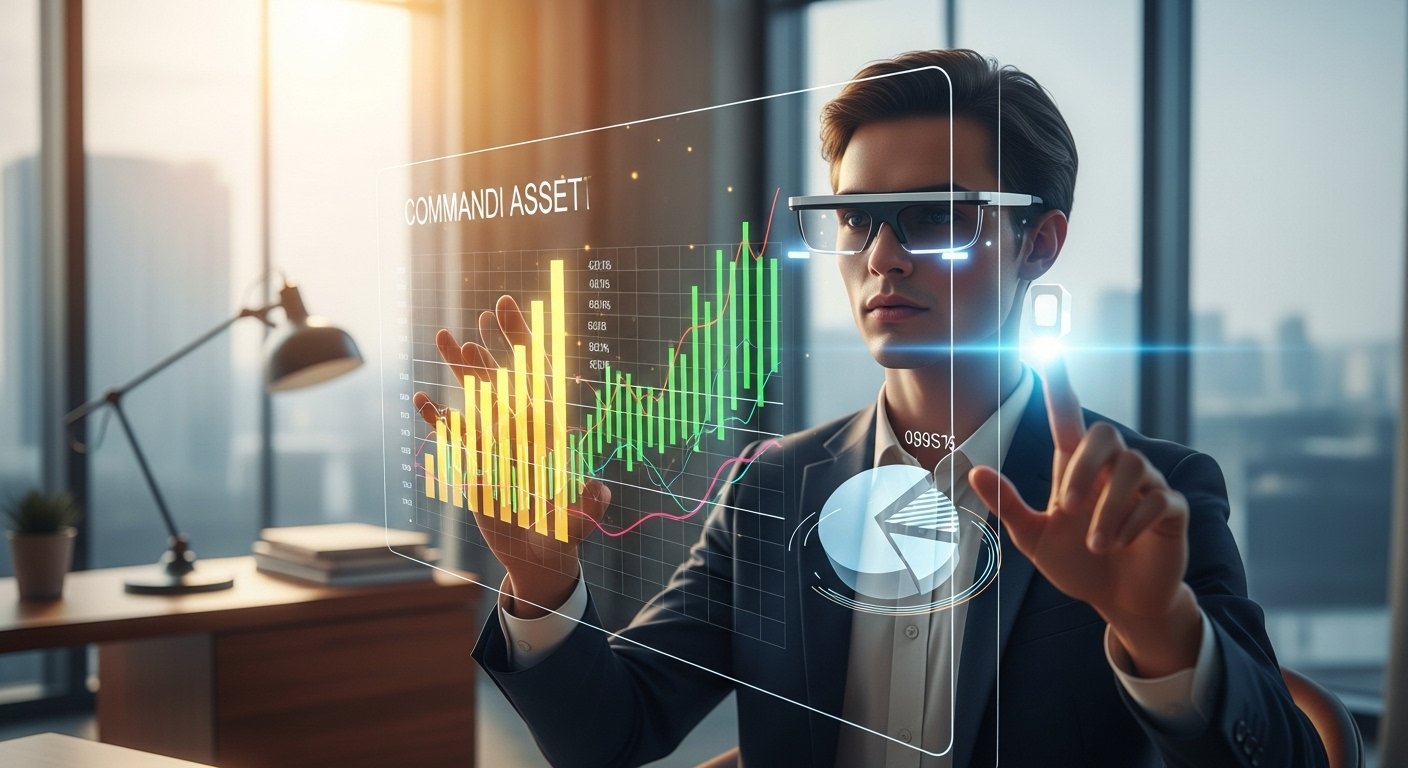

Augmented reality in accounting is about to change your life for the better. You might think accounting is just dusty books and boring math. But the year 2026 is bringing a wild digital makeover to the whole game. We are moving away from flat paper and tiny computer screens. Now, we are stepping into a world where numbers actually float in the air around you. This immersive revolution is turning every boring ledger into a cool digital playground.
Introduction to the Immersive Revolution in Accounting
The shift from old-school spreadsheets to digital ecosystems is happening fast. We are seeing the rise of the digital accountant who works in 3D. This isn’t just about fancy gadgets or looking cool in the office. It is about making sense of big data in a way humans can actually feel. Augmented reality in accounting lets you see the hidden stories inside the numbers. It turns a mountain of data into a clear path for business success.
Defining the Shift from Traditional Ledgers to Immersive Ecosystems
- Digital transformation is replacing paper trails with live data streams.
- Cloud computing acts as the backbone for these new virtual workspaces.
- Immersive environments allow for a 360-degree view of a company’s health.
- Real-time updates mean you never look at old, stale information again.
The Evolution of the Digital Accountant in the Mid-2020s
The role of the accountant has changed from a math whiz to a tech expert. In 2026, you need to know how to navigate virtual worlds to find tax breaks. Accountants are now becoming strategic partners who use tech to predict the future. They use augmented reality in accounting to explain complex ideas to their bosses. This evolution makes the job much more exciting than just checking boxes.
Distinguishing Between Virtual Reality (VR) and Augmented Reality (AR)
It is easy to get these two confused when talking about tech. Virtual Reality takes you to a completely different digital world. Augmented reality in accounting keeps you in your room but adds digital layers. You can see your desk and your coffee while charts float above them. Both tools are super useful for different parts of the accounting job.
The Technological Foundation: VR vs. AR in Finance
To understand the future, we have to look at the tools being used. These technologies are the building blocks of the modern finance office. They help us interact with data in ways we never thought possible before. Augmented reality in accounting is the bridge between the real world and digital data. Understanding the tech foundation helps firms choose the right equipment for their needs.
Virtual Reality (VR): Creating Fully Immersive Financial Environments
VR lets you step inside a computerized simulation of your entire firm. You can walk through a “data warehouse” to see where money is spent. It replaces a small, cramped office with an infinite digital workspace. This is great for deep focus when you need to block out distractions. You can organize your reports in a 360-degree circle around your head.
Augmented Reality (AR): Enhancing the Real World with Financial Data
AR is the superstar for daily tasks in the accounting field. You use AR glasses or even your phone to see data overlays. It connects physical receipts or assets directly to their digital records. You can look at a piece of machinery and see its depreciation cost. This makes augmented reality in accounting a huge time saver for everyone.
Mixed Reality (MR): The Hybrid Approach
Mixed Reality is like the best of both worlds combined into one. It lets digital objects interact with the physical things in your office. You can place a virtual chart on your real wall and it stays there. This helps you stay aware of your coworkers while working on digital tasks. It is the most advanced way to handle hands-on ledger manipulation today.
Enhanced Data Visualization and Interaction
Traditional spreadsheets are flat and can be very hard to read. Your brain isn’t really built to look at thousands of tiny cells. Augmented reality in accounting changes these cells into 3D shapes you can touch. When you can see the height and depth of data, you find patterns. This visual shift makes it way easier to spot big mistakes or wins.
Moving Beyond 2D Spreadsheets
- 3D modeling turns boring rows into skyscrapers of financial data.
- Spatial awareness helps you group related costs in different physical areas.
- Interactive elements let you tap a data point to see the source.
- Dynamic scaling lets you zoom from a single receipt to the whole year.
Intuitive Analysis through Immersive Formats
Immersive formats make analyzing data feel like playing a video game. You can walk through your financial statements to find hidden bottlenecks. It helps you understand complex cash flow issues by seeing the movement. You get a deeper and more accurate understanding of the data. Analysis becomes much more natural and way less of a headache.
Heat Maps and Spatial Data Anchoring

Heat maps use bright colors to show you where the most money is. Red might show high-risk areas while green shows steady profit. Spatial data anchoring lets you “pin” digital notes to your real files. This means you can find a specific note exactly where you left it. It keeps your physical and digital worlds perfectly synced up at all times.
Revolutionizing Collaboration and Communication
Working with a team can be a total pain when you are far apart. Augmented reality in accounting makes the world feel a lot smaller. You can meet with someone in London while sitting in your pajamas. It feels like they are standing right next to you at your desk. This new way to work together is making teams much more productive.

Virtual Meeting Spaces and Digital Twin Offices
Digital twins are virtual copies of your real office and team. You can join global partner meetings in a shared virtual room. It is way better than a boring video call with bad lag. You can see everyone’s body language and work on the same charts. It keeps that “face-to-face” feel even if you are across the ocean.
Real-Time Collaborative Financial Reporting
- Live editing lets multiple people change a report at the same time.
- Instant sharing sends files to partners with just a simple hand gesture.
- International speed breaks down time zones so the work never stops.
- Cost savings mean your firm spends zero dollars on expensive flights.
Multi-User Data Manipulation
Teams can now jump into the same 3D model to solve problems. One person can change a tax rate while another sees the result. It makes “what-if” planning sessions much more interactive and fun. You don’t have to wait for someone to email a new version. Everyone sees the same truth at the exact same time in VR.
Training, Education, and Professional Development
Learning how to be an accountant used to take forever in a classroom. Now, training is fast and feels like a total adventure. Using augmented reality in accounting lets students learn by actually doing. They don’t just read about an audit; they go on a virtual one. This hands-on style makes the info stick in their brains much better.
Simulation-Based Learning for Aspiring Accountants
Virtual simulations can put you in high-pressure situations safely. You can practice a tough tax audit without any real-world risk. It helps you build confidence before you ever meet a real client. These modules can cover everything from basic math to complex law. It is the smartest way to train the next generation of pros.
Continuous Professional Development (CPD) through Webinars
- Flexible hours let you train whenever you have a spare moment.
- Interactive sessions keep you awake and engaged during long lessons.
- Real-life scenarios test your skills with problems that actually happen.
- Virtual classrooms connect you with expert teachers from around the globe.
Gamification of Accounting Certifications
Getting your license can now feel like winning a cool game. You earn points and rewards for finishing training missions in VR. Real-time feedback tells you exactly what you got wrong and why. This keeps students excited to keep going even when it is tough. It turns a boring certification process into a fun, rewarding quest.
Automation and the Integration of AI with AR/VR
AI is the brain that does all the heavy lifting for you. But augmented reality in accounting is the eyes that see it happen. Together, they make a super-tool that takes care of the boring stuff. You can watch AI work on your files through your AR glasses. This frees you up to do the high-level thinking that matters.
Streamlining Routine Accounting Tasks
Routine tasks like data entry are basically gone in 2026. AI handles the numbers while you watch the flow in AR. You can see where the data is coming from and where it goes. This makes it easy to spot if the computer made a mistake. It keeps the workflow moving fast and without any major hiccups.
Shifting the Accountant’s Focus to Strategic Value
- Strategic planning becomes your main job instead of just counting.
- Decision-making is easier when you have clear 3D visuals.
- Workload reduction means you aren’t staying late at the office.
- Productivity boosts happen when you focus on the big business goals.
Voice-Activated Financial Commands
You can now talk to your computer to get things done fast. Just say “show me the 2025 tax returns” and they appear. Natural language processing makes it feel like talking to a friend. You don’t have to click through a hundred folders to find files. It makes navigating your digital office as easy as breathing.
Transforming Client Interaction and Experience
Clients usually hate looking at confusing financial reports. But augmented reality in accounting turns reports into a fun show. You can show them their money in a way they actually understand. It builds a huge amount of trust because everything is so clear. Your clients will love how easy it is to talk to you.
Immersive Client Presentations
You can give your clients a “walk-through” of their own money. They can see how their spending today affects them in five years. It makes your ideas much more persuasive and easy to follow. Interactive 3D charts are way better than boring old paper slides. Your presentations will be the talk of the whole business community.
Improving Transparency and Building Trust
- Visual storytelling helps clients see the “why” behind the math.
- Clarity comes from letting clients see the numbers for themselves.
- Engagement increases when the client can touch the data.
- Relationship building happens when you both understand the plan.
Client Portals in the Metaverse
Imagine having a permanent virtual lounge for your top clients. They can hop in any time to see their real-time financial health. You can meet them there for a quick chat without either of you traveling. It makes your service feel premium and very high-tech. It is the ultimate way to stay connected in a digital world.
The Evolution of Remote Auditing and Review
Auditing used to mean spending weeks in a cold warehouse. Now, augmented reality in accounting lets you audit from your couch. You can see exactly what is on the shelves using remote tech. This makes the whole process much faster and way less annoying. It also means fewer mistakes because the tech is super sharp.
On-Site Audits without the Travel
Auditors don’t have to be physically there to do a great job. You can use AR to see through a worker’s eyes at the site. You can inspect assets and check documents from miles away. This saves a ton of time and money on travel for the firm. It makes the whole audit cycle much smoother for everyone involved.
Increasing Audit Accuracy and Reducing Human Error
- AR overlays can highlight missing info on a physical page.
- Digital trails record every step so nothing gets lost or hidden.
- Error reduction happens when the computer helps you double-check.
- Efficiency gains mean you finish the audit in half the time.
Drone-AR Integration for Inventory Verification

Drones can fly through a warehouse and count boxes in seconds. AR then takes that count and matches it to your digital records. You can see the results instantly on your headset or tablet. This is way more accurate than a human with a clipboard. It turns a boring task into a high-tech and precise operation.
Strategic Decision-Making and Predictive Support
Making big decisions can be scary if you aren’t 100% sure. Augmented reality in accounting lets you see the future before it happens. You can test out different choices in a virtual environment first. This helps you pick the best path with a lot less stress. It turns you into a strategic hero for your company or client.
Visualizing Financial Forecasts
You can project your business plans into a 3D space for review. See how a new factory or product might change your cash flow. It helps you see the big picture without getting lost in details. You can change variables and watch the forecast update in real-time. This visual feedback is a total game changer for planning.
Risk Assessment and Mitigation
- What-if simulations let you try out risky ideas safely.
- Risk identification is easier when you see “red zones” in 3D.
- Avoidance strategies can be tested before you spend any real money.
- Informed decisions come from having all the visual data ready.
Scenario Stress Testing
What happens if the market crashes or a supplier goes bust? You can simulate these disasters in VR to see if you survive. It helps you build a plan to stay strong even when things get bad. This kind of testing used to be impossible for small firms. Now, everyone can be prepared for anything the world throws at them.
Improved Client Services and Stakeholder Accessibility
Everyone wants to know where their money is right this second. Augmented reality in accounting gives people that power with a click. You don’t have to wait for a monthly report to see your balance. This kind of speed makes stakeholders very happy and very relaxed. It sets you apart as a modern and forward-thinking accountant.
Real-Time Financial Position Access
Clients can just scan a paper with their phone to see live data. It overlays the current bank balance and profit right on the page. This gives people instant peace of mind about their business. It makes the financial position of the firm totally transparent. Accessibility is the new standard for great accounting service today.
Strengthening Professional Relationships
- Trust building happens when you never hide any numbers.
- Transparency shows you have nothing to fear from a close look.
- Credibility goes up when you use the best tech in the field.
- Loyalty grows because clients love the easy, high-tech experience.
Ethical, Regulatory, and Security Implications
With all this cool tech, we have to stay safe and honest. Cybercrooks are always looking for ways to steal digital data. We also need to make sure the rules of accounting keep up. Moving to the virtual world brings some new challenges we must face. But with the right plan, we can keep everything totally secure.
Cybersecurity in the Virtual Office
Keeping your data in the cloud requires some very tough locks. You have to guard against hackers trying to enter your VR space. Avatars can be faked, so you need to verify who you talk to. Security is the most important part of any virtual accounting office. Firms are investing big money to keep their clients’ secrets safe.
Regulatory Compliance and Standard Setting
The big bosses of accounting are writing new rules for 2026. They need to decide if a “virtual audit” is as good as a real one. Standard settings are changing to include digital and virtual evidence. This ensures that every firm stays honest even in the metaverse. Keeping a solid audit trail is still the number one goal.
Implementation Challenges and Considerations
Not every firm can just flip a switch and be in VR tomorrow. There are some real hurdles to jump over before you get there. You have to think about the cost and the time it takes to learn. But the firms that start now will be way ahead of the pack. It is an investment that pays off big time in the long run.
Hardware Costs and ROI
- Headset prices can be high, but they are getting cheaper every year.
- Infrastructure needs a strong internet connection and good servers.
- ROI comes from saving thousands on travel and office space.
- Efficiency helps you take on more clients without hiring more staff.
The Digital Divide and Change Management
Older firms might find it hard to stop using paper and pens. There is a big learning curve for people who aren’t tech-savvy. You have to manage the stress of moving to a virtual world. But with good training, even the most traditional pros can learn. It is all about taking small steps toward a digital future.
Conclusion: The New Frontier of the Accounting Sector in 2026
The year 2026 marks a huge positive shift for the world of finance. Augmented reality in accounting has turned a dry job into an art form. We have left the world of flat numbers for a 3D reality. This means more accuracy, faster work, and much happier clients. It is a bright future for anyone ready to embrace the tech.
Accountants are no longer just people who do math in a corner. They are the financial architects of the new digital age. By using tools like VR and AR, they can build stronger businesses. They can protect wealth and find new ways to grow in the metaverse. The accounting field has never been more exciting or more important.
| Feature | Traditional Accounting | Accounting in 2026 (AR/VR) |
| Data View | 2D Spreadsheets | 3D Immersive Models |
| Meetings | Physical/Video Calls | Virtual Offices/Avatars |
| Auditing | On-site/Manual | Remote AR/Drone-assisted |
| Training | Classrooms/Books | VR Simulations/Gamification |
| Analysis | Manual Calculations | AI-powered/Visual Stress Tests |
FAQs
What is the primary difference between AR and VR for everyday bookkeeping?
Virtual reality usually requires you to leave your physical surroundings to enter a digital ledger world. Augmented reality in accounting lets you stay at your desk while digital data overlays on your real-world books. Most bookkeepers prefer AR for daily tasks because they can still see their physical keyboard and coffee. VR is typically saved for deep data dives or complex audit simulations.
How does augmented reality in accounting handle data privacy?
Security is a top priority for developers creating these financial tools. Most AR glasses use encrypted cloud storage to ensure that your financial data is never intercepted. You can also set specific permissions so only authorized eyes can see the digital overlays. This prevents sensitive information from being visible to people walking past your desk.
Can small accounting firms afford this technology in 2026?
The cost of AR and VR hardware has dropped significantly over the last few years. Many entry-level headsets are now priced similarly to a high-end laptop or smartphone. Small firms can start with basic mobile-based AR apps before investing in expensive glasses. The efficiency gains usually help smaller teams compete with much larger organizations.
Do I need a supercomputer to run these accounting simulations?
Most modern AR and VR headsets are “standalone,” meaning they have the computer built right inside them. However, for massive datasets, the heavy lifting is done in the cloud. You only need a stable, high-speed internet connection to keep the data flowing. You won’t need to buy a massive server room just to use augmented reality in accounting.
How does eye-tracking technology work in virtual financial offices?
Many VR headsets now use eye-tracking to see exactly which numbers you are looking at. If you stare at a discrepancy, the system can automatically pull up the source document for you. This makes navigating complex sheets feel faster than using a mouse. It reduces the strain on your hands and speeds up the review process.
Is there a risk of motion sickness while auditing in VR?
Newer headsets in 2026 have very high refresh rates that almost eliminate motion sickness. Designers also create “seated experiences” for accountants so there is no dizzying movement involved. If you feel uneasy, you can simply switch to augmented reality in accounting. AR keeps you grounded in the real world, which usually prevents any feelings of nausea.
Can AR glasses replace my multiple computer monitors?
Yes, many accountants are ditching their three-monitor setups for a single pair of AR glasses. You can open as many virtual windows as you want and pin them to the air around you. This saves physical desk space and lets you work from anywhere. It turns a tiny hotel room desk into a massive, multi-screen command center.
How does the technology verify physical inventory in real-time?
AR glasses can use object recognition to identify products in a warehouse. As you look at a pallet, the glasses display the quantity that should be there according to the ledger. If there is a mismatch, the system flags it in red immediately. This makes the physical-to-digital reconciliation process nearly instantaneous.
What happens if the internet goes down while I am in a virtual meeting?
Most accounting VR platforms have an offline mode that saves your progress locally. Your avatar might freeze for others, but your data stays safe and synchronized. Once your connection returns, the system pushes your updates to the cloud. It works very similarly to how modern cloud-based spreadsheets handle connectivity issues.
Are there specific AR apps designed for tax season?
Developers have created specialized “Tax Season Overlays” for augmented reality in accounting. These apps highlight tax-deductible items on physical receipts as you scan them. They also keep a countdown clock and a checklist of required forms floating in your peripheral vision. This helps tax pros stay organized during the busiest time of the year.
Can clients interact with the virtual data without owning a headset?
Most platforms allow clients to join your virtual space through a standard web browser on their phone or PC. They won’t get the full 3D experience, but they can still see the charts you are pointing to. This ensures that you can still provide high-tech service even if the client is low-tech. It makes the transition to the metaverse much easier for everyone.
How do these tools help with international tax law compliance?
AR interfaces can automatically translate foreign tax documents as you look at them. They also use AI to check local laws based on the geographic location of the transaction. This is a huge help for accountants managing global clients with different rules. It reduces the need to constantly look up foreign tax codes in separate books.
Does augmented reality in accounting work with old paper records?
The technology is great at bridging the gap between old paper and new digital files. You can look at a 10-year-old paper ledger and see a digital “audit trail” appear over it. The software uses optical character recognition (OCR) to read the handwriting and match it to digital records. It makes “going paperless” a much slower and less painful process.
Can I customize my virtual accounting workspace?
Personalization is one of the best features of the virtual financial office. You can change your surroundings from a standard office to a beach or a quiet forest. You can also organize your floating tools exactly where you like them for maximum speed. This level of comfort helps many accountants stay focused for longer periods.
What is the learning curve for an older CPA?
Most 2026 software is designed with “Natural User Interfaces,” meaning you use your hands and voice. You don’t have to learn complex keyboard shortcuts or coding. If you can point at a chart or say a command out loud, you can use it. Most firms find that even their most senior staff can get comfortable within a week.
How do AR glasses handle low-light conditions in a warehouse?
Professional-grade AR glasses often include infrared or low-light sensors. This allows auditors to see inventory clearly even in dark corners or poorly lit storage rooms. The digital data remains bright and readable regardless of the lighting in the real world. It ensures that the audit quality never drops due to the environment.
Will augmented reality in accounting make meetings shorter?
Early data suggests that virtual meetings are about 25% faster than traditional ones. This is because everyone is looking at the same 3D data and can point to issues directly. There is less time spent explaining which cell or row you are talking about. Visual clarity leads to much faster consensus and decision-making.
Is it possible to “record” an audit in a 3D environment?
Yes, you can record your entire walkthrough of a financial dataset. This creates a 3D “replay” that other partners or regulators can watch later. It provides much better evidence than a simple written report or a flat video. It shows exactly what the auditor saw and how they reached their conclusion.
How does the tech help with detecting financial fraud?
AI algorithms running behind the AR display can spot patterns that humans might miss. When the AI finds a suspicious transaction, it can make it “pulse” or glow in your field of vision. This draws your attention to potential fraud instantly. Augmented reality in accounting acts as a powerful magnifying glass for hidden financial crimes.
Can I use these tools for personal finance management too?
While built for pros, many of these AR tools are being adapted for regular people. You could soon look at your fridge and see a digital overlay of how much you spent on groceries this month. It helps people visualize their spending habits in the real world. This encourages better financial health for the general public as well.
