

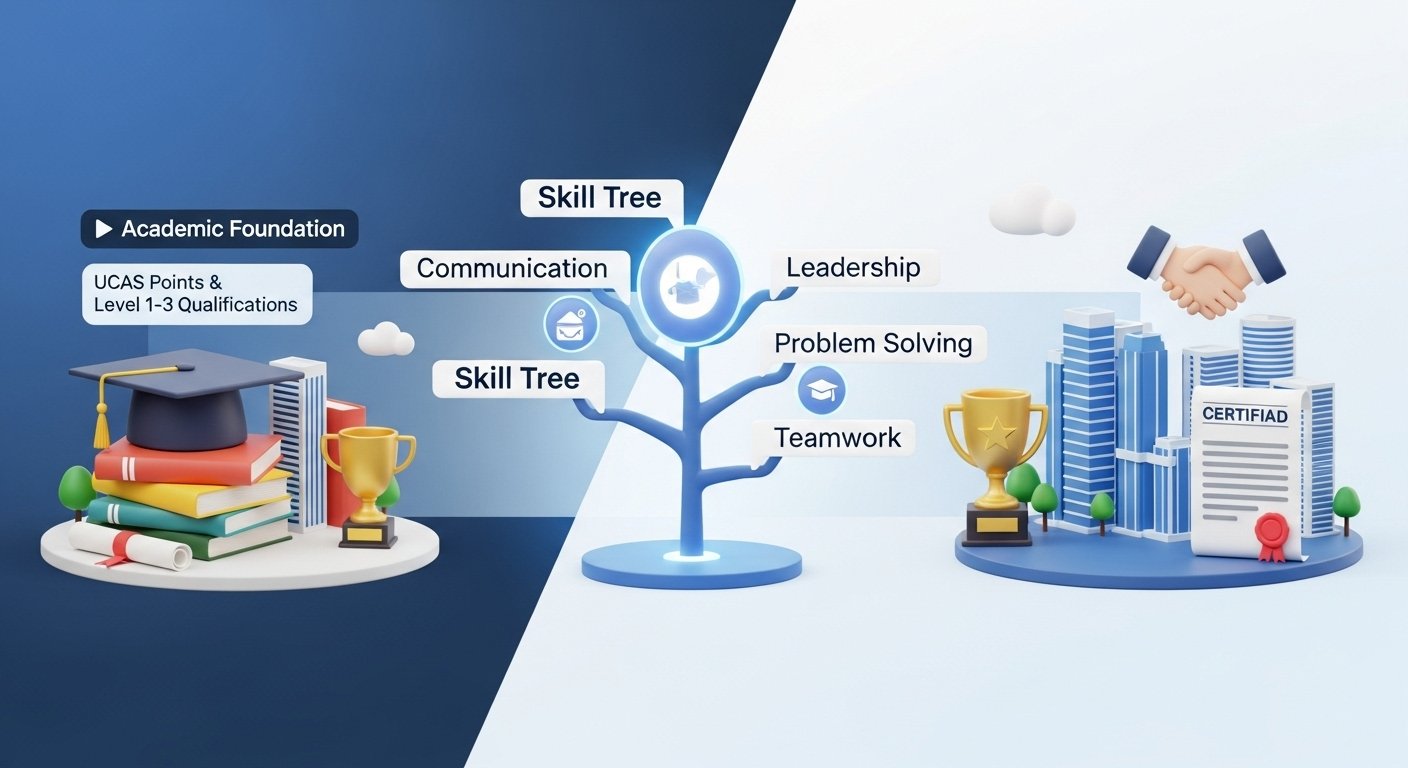

Getting ahead today takes more than just being smart. You need to show you can actually get things done with others. This is where a certificate of personal effectiveness comes into play for your future. It is a special way to prove you have the real skills bosses want. You will learn how to lead, talk, and solve tough problems. It is basically a cheat code for your career or college life.
Introduction to the Certificate of Personal Effectiveness
The certificate of personal effectiveness is a fancy name for a super helpful qualification. Most people call it CoPE for short because it is easier to say. It comes in three different levels called Level 1, Level 2, and Level 3. Each level helps you grow your skills in a bigger and better way. It is all about making sure you are ready for the real world.
Definition and Essence
This qualification is recognized all across the country as a mark of quality. It is not like a math test where you just memorize numbers. Instead, it looks at how you act and what you can do. It focuses on your personal qualities and the cool things you achieve. It is the perfect way to show you are a well-rounded person.
The Core Aim
The main goal is to give you credit for the stuff you already do. Maybe you help out in your town or play on a team. This program records those activities so you can show them off later. It proves you have the ability to handle different tasks with ease. You get to turn your hobbies into a real professional edge.
Educational Philosophy
This program is different from regular school because it is not boring. It does not care about sitting in a desk for hours. It cares about your initiative and how you bounce back from mistakes. You spend a lot of time thinking about what you learned and how to improve. It is all about doing things rather than just reading about them.
A Philosophy of Growth
Having this certificate means you have a mindset that never stops growing. It is not just a piece of paper you put in a drawer. It represents a way of living where you always try to be better. This growth mindset helps you in your job and your private life. It turns you into a person who sees every challenge as a win.
The Strategic Importance of Personal Effectiveness
In the business world, being effective is like having a superpower. It is the difference between just having a job and having a career. Companies want people who can handle change without freaking out too much. They look for workers who can manage themselves and help their coworkers. This is why personal effectiveness is a big deal for everyone.
Why Personal Effectiveness Matters in Business
Every business wants to stay ahead of the competition these days. They need people who bring more to the table than just computer skills. A certificate of personal effectiveness shows you have that extra spark. It helps you navigate the fast-paced world of modern offices and shops. You become the person that everyone else can rely on daily.
- Soft skills as a differentiator. While many people have the same degree, not everyone has great people skills. These soft skills make you stand out when you apply for a job.
- Organizational benefits. Companies thrive when their workers can handle complex tasks and stay calm. They save money and time when employees are resilient and capable.
- Culture building. Good personal skills help create a friendly and productive place to work. It helps develop new leaders from within the company instead of hiring outsiders.
Educational and Career Value
If you are thinking about college, this qualification is a gold mine. It shows admissions officers that you are ready for higher level study. It also gives you a boost if you want to start working right away. You learn how to be a professional before you even get your first paycheck. It is the best foundation you can build for your future.
- Nationally recognized standards. You can trust this qualification because it meets strict rules for quality. It is accepted by schools and bosses across the entire nation.
- Transferable skills. The things you learn here work in any job you can imagine. Whether you are a doctor or a gamer, these skills will help you succeed.
- UCAS points and progression. Level 3 of this certificate gives you 16 UCAS points for university. This can be the extra push you need to get into your dream school.
- Employability. It prepares you for the workplace by teaching you how to act and work. You will feel much more confident when you walk into a job interview.
The Core Skill Units: The Six Pillars of Competence

There are six main areas you will work on to get your certificate. These are like the building blocks of being a great person and worker. You will practice them until they feel totally natural to you. Each pillar helps you handle a different part of your daily life. When you master all six, you become an unstoppable force of nature.
Communication Skills
Talking to people seems easy, but doing it well is a real art. This part of the program helps you get your point across clearly. You learn how to speak so people actually want to listen to you. It also teaches you how to be a better listener for others. This makes every conversation you have much more productive and fun.
- Communicating through discussion. You will practice talking in groups and sharing your best ideas. It is about giving and taking during a conversation to reach a goal.
- Oral presentation. You will learn how to stand up and give a talk to a room. This builds your confidence and helps you share information with many people at once.
- Business impact. Clear talking prevents mistakes and builds trust with your team at work. It makes everyone feel like they are on the same page all day.
Working with Others (Teamwork and Collaboration)
No one can do everything all by themselves in the real world. You need to know how to work with a team to win. This unit shows you how to be a team player everyone loves. You will learn how to help others and ask for help too. It makes working on group projects way less stressful for you.
- Collaborative goals. You will work with a group to hit a specific target or finish a task. It is all about pulling together to make sure the whole team wins.
- Cross-functional work. In big companies, you often have to work with different departments. This skill helps you navigate those different groups without any major hiccups.
- Conflict resolution. Sometimes teams disagree, and that is totally okay if you handle it right. You will learn how to fix problems between people without any drama.
Improving Own Learning and Performance
This unit is all about making you the best version of yourself. You take a long look at what you do and find ways to improve. It is like being your own coach and cheerleader at the same time. You will learn how to set goals that you can actually reach. It keeps you moving forward instead of staying stuck in one place.
- Target setting. You will learn how to set SMART goals that keep you focused and busy. This helps you track your progress so you can see how far you’ve come.
- Reflective practice. This means thinking about what you did and how it actually turned out. It is the best way to learn from your mistakes and your wins.
- Personal Development Plans. You will create a roadmap for your future career and life goals. Using feedback from others helps you grow faster than you ever thought possible.
Problem Solving and Analytical Skills
Life is full of little puzzles and big challenges that need solving. This pillar teaches you how to look at a problem and fix it. You won’t get overwhelmed when things go wrong anymore. Instead, you will have a plan to find the best solution possible. It turns you into a person who can fix almost anything.
- Critical thinking. You will learn to look at facts objectively instead of just following your feelings. This helps you make smart choices based on real evidence and logic.
- Structured approaches. This is a step-by-step way to tackle any issue that comes your way. You identify the problem, gather clues, and then pick the best fix.
Research and Information Management
Knowing where to find information is just as important as knowing it. This unit helps you become a master at finding the right facts. You will learn how to organize what you find so it’s useful. It makes school projects and work reports much easier to handle. You will never feel lost in a sea of data again.
- Project planning. You will learn how to start a research project from the very beginning. This involves setting steps and a timeline to make sure you finish on time.
- Source evaluation. Not everything you read on the internet is true or helpful. You will learn how to pick the best sources to make your work solid.
Self-Management and Accountability
Being your own boss is hard, but this unit makes it easy. You learn how to manage your time and your energy every day. It is about being the kind of person who gets things done. You will take responsibility for your work and your own choices. This is a skill that will make every boss want to hire you.
- Priority management. You will learn how to pick the most important tasks and do them first. This keeps you from wasting time on stuff that doesn’t really matter much.
- Remote and hybrid relevance. Managing yourself is super important if you work from home. It ensures you stay productive even when no one is watching over you.
The CoPE Curriculum: Modules and Credit System
The way you earn your certificate of personal effectiveness is very flexible. You get to pick different modules that interest you the most. This makes the whole program feel much more like a fun adventure. You earn credits as you go, which track all your hard work. It is a very rewarding way to learn new things every day.
The Module Framework

There are about 12 or 13 modules you can choose from in this program. Each one focuses on a different part of life or work skills. You can mix and match them to fit your own personal interests. This variety ensures that everyone finds something they truly enjoy doing. It keeps the learning fresh and exciting for all the students.
- Communication and arts. This includes modules on how to express yourself through art or talking. You might even look at how people connect across different countries and cultures.
- Community and environment. These modules focus on helping your local town and the planet. It is all about being a good neighbor and protecting the world we live in.
- Health and fitness. You can learn about keeping your body and mind in great shape. This includes playing sports or just learning about healthy food and exercise.
- Life and beliefs. Some modules look at how to live on your own and what people believe. It helps you understand different values and how to manage your daily life.
- Work and technology. These focus on getting ready for a job and using cool new tools. You can learn about science, tech, and how businesses actually run their shops.
The Credit and Time Commitment
To get your certificate, you need to put in a certain amount of time. Every 10 hours of work you do earns you exactly one credit. This makes it easy to see how much progress you are making. You just keep racking up credits until you hit the magic number. It is a very fair way to measure all your effort and time.
- The credit system. Most students aim to get 12 credits to finish the whole certificate. Each credit shows you have mastered a small part of a larger module.
- Total Qualification Time. Levels 1 and 2 usually take about 120 hours to complete in total. Level 3 takes a bit longer at 150 hours because it is more advanced.
- Requirement for completion. You have to show you’ve done the work and learned the skills to pass. Once you have your credits, you are officially a personal effectiveness pro.
Assessment and Evidence: The Path to Certification
Getting your certificate of personal effectiveness is not about taking a big test. You don’t have to sit in a quiet room and sweat over a paper. Instead, you prove what you can do through a portfolio of your work. It is a much more relaxed and natural way to show your progress. You just collect evidence as you go through the whole program.
The Portfolio of Evidence

Your portfolio is like a scrap book of all the cool things you’ve done. It holds all the proof that you have the skills needed to pass. Since there are no exams, this portfolio is the most important thing you’ll make. You get to fill it with real-world examples of your hard work. It is a great way to look back and see how much you’ve grown.
- 100% coursework-based. Everything you do for the course counts toward your final grade. There is no pressure from a single exam at the end of the year.
- The Plan-Do-Review cycle. For every task, you must plan it, do it, and then talk about it. This three-step process is the heart of how you prove your personal effectiveness.
- Evidence types. You can include photos, videos, letters, and reports in your special portfolio. Witness statements from people who saw you work are also very helpful for proof.
Internal and External Quality Assurance
To make sure everyone is graded fairly, there are some quality checks. Your teachers or trainers will look at your work first to be sure. This is called internal moderation and it helps catch any simple mistakes. It ensures that every student is being held to the same high standard. You can feel proud knowing your certificate is truly earned and valid.
- Standardization. Schools and colleges follow a set of rules to make sure grading is fair. This means a pass at one school is the same as a pass at another.
- External moderation. People from CCEA or ASDAN will visit to check the school’s grading. This final check makes sure the national standards are being followed perfectly.
- Levels of achievement. Level 1 is a great start, while Level 2 and 3 require more independence. The higher the level, the more detailed your evidence needs to be for success.
Practical Implementation and Social Impact
This qualification is not just about you; it is about the world around you. It encourages you to get out there and make a positive difference. You will find ways to help your community while building your own career. It connects your personal growth with the needs of other people and groups. This makes the certificate of personal effectiveness very special and meaningful.
Participating in the Community or Workplace
Being a good citizen is a big part of being an effective person. You will learn how to contribute to your workplace culture in a good way. This might mean helping with a charity event or just being a great teammate. It shows that you care about more than just your own personal paycheck. Employers love workers who bring a positive vibe to the whole office.
- Corporate citizenship. You will learn how to align your actions with what a company stands for. It makes you a key part of the team instead of just another worker.
- Social responsibility. Volunteering and helping others is a great way to practice your new skills. It builds your character and helps you understand the world much better.
Enrollment and Validation Process
Starting your journey to get certified is pretty simple and straightforward. You just need to find a place that offers the program near you. Once you are in, you will have plenty of help along the way. People will guide you to make sure you are on the right track. It is a very supportive environment for anyone who wants to learn more.
- Identifying providers. Most schools, colleges, and training centers offer this cool qualification. You can check online to find the best spot for you to get started.
- The role of mentors. You will have assessors and mentors who check your work and give tips. They are there to help you succeed and make sure your portfolio is perfect.
Conclusion: The Future of Personal Effectiveness
The certificate of personal effectiveness is your ticket to a brighter future. It proves that you have the skills that really matter in life and work. By finishing this program, you show you can handle almost anything with confidence. It is the perfect way to build a strong foundation for your career. You will be ready to take on the world and win every single time.
- Holistic development summary. You have learned how to talk, work with others, and manage yourself. These skills all work together to make you a more capable and happy person.
- Long-term value. This framework isn’t just for now; it is for the rest of your life. It teaches you how to keep learning and growing no matter how old you get.
Frequently Asked Questions
What is the minimum age to start the Certificate of Personal Effectiveness?
Most students begin the program at age 14, typically during their GCSE years. However, adult learners can also enroll to improve their employability. There is no strict upper age limit for someone wanting to boost their skills.
How does CoPE differ from a traditional GCSE?
A GCSE focuses on subject-specific knowledge like history or math and ends with an exam. CoPE focuses on how you work and solve problems through a portfolio. It is often used to complement GCSEs by proving you have practical life skills.
Can I complete the qualification entirely online?
While you can manage your portfolio digitally, you usually need a registered center to oversee your work. Many tasks require group interaction, such as discussions or teamwork. Some providers offer hybrid models, but total isolation is difficult due to the social nature of the tasks.
Is the Certificate of Personal Effectiveness recognized outside the UK?
The qualification is primarily recognized within the UK education system and by UCAS. However, the skills it certifies are global, and international employers often value the “soft skills” evidence. You should check with specific international universities for credit transfer.
What happens if I lose my portfolio?
Losing your portfolio is a major setback because it contains all your proof of work. It is highly recommended to keep digital backups of all photos and documents. Most modern centers now use e-portfolios to prevent physical loss.
Can I move from Level 1 straight to Level 3?
Yes, it is possible to skip levels if you can demonstrate the required maturity and skill depth. However, Level 3 is much more demanding in terms of research and independence. Most advisors suggest completing Level 2 first to understand the “Plan-Do-Review” method.
Who is eligible to be a “witness” for my evidence?
A witness should be a responsible adult who saw you perform the task, such as a teacher, coach, or supervisor. They cannot be a peer or a close friend in most cases. Their statement must describe exactly what you did to meet the criteria.
How long does the final moderation process take?
Once you submit your portfolio, internal moderation happens within your school. External moderation by CCEA or ASDAN usually occurs during set windows in the academic year. You typically receive your certificate a few months after the final moderation is successful.
Are there any specific subjects I must choose for the modules?
No, the modules are designed to be flexible so you can pick what fits your life. If you are an athlete, you might focus on the Health and Fitness module. If you volunteer, you might choose the Citizenship and Community module.
Does the qualification expire over time?
The certificate does not have an expiration date. Once you have earned the qualification, it remains on your record forever. However, the further you get in your career, the more you will rely on your work experience rather than school-level certificates.
Can students with learning disabilities participate?
Yes, CoPE is known for being highly inclusive. Since it is not exam-based, students can work at their own pace and show evidence in ways that suit them. It is a popular choice for providing a sense of achievement to students who struggle with traditional tests.
What is the cost of enrolling in the program?
The cost varies depending on whether you are doing it through a school or an independent training provider. Usually, schools cover the registration fees for their students. Independent learners may have to pay a small fee for the moderation and certification process.
Is CoPE the same thing as the Duke of Edinburgh’s Award?
They are different programs, but they are very similar in spirit. Many students use their activities from the Duke of Edinburgh’s Award as evidence for their CoPE portfolio. Doing both is a great way to maximize the credit you get for your extracurricular activities.
Can I use work experience as part of my portfolio?
Absolutely, work experience is one of the best ways to gather evidence. You can use your time at a job to prove “Working with Others” or “Problem Solving.” You just need a supervisor to sign off on your tasks.
What is an “artefact” in a portfolio?
An artefact is a physical or digital item you created during a task. Examples include a flyer you designed for a club, a budget spreadsheet, or a letter you wrote. It serves as hard proof that you actually did the work.
How many credits can I earn in one academic year?
Most students earn their 12 credits over one or two academic years. It depends on how much time you can dedicate to the modules. It is designed to be manageable alongside other subjects.
Does Level 3 CoPE help with apprenticeships?
Yes, apprenticeship providers look for candidates who are reliable and can work in teams. Showing a Level 3 certificate proves you have the “employability” skills that are often missing in young applicants. It makes you a much lower risk for the employer.
Can I fail the Certificate of Personal Effectiveness?
You don’t “fail” in the traditional sense; rather, your portfolio is either “complete” or “not yet complete.” If a moderator finds a section missing, they will tell you what is needed. You then have the chance to fix it and resubmit.
What is the “Plan-Do-Review” cycle?
This is a mandatory process where you first write down what you intend to do. Then, you carry out the task (the “Do” part). Finally, you write a reflection on what went well and what you would change next time.
Can I get a replacement certificate if I lose mine?
Yes, you can contact the awarding body (like CCEA or ASDAN) to request a replacement. There is usually a fee for printing and mailing a new official certificate. It is best to keep a scanned copy on your computer just in case.
