 Skip to content
Knowing the difference between capacity vs capability is like knowing the difference between a fast car and a big gas tank. You need both to win the race, but they do very different things. Organizations today are constantly trying to win big in their industries. To do that, they have to master their skills and manage their resources. If you get these mixed up, you might end up with a team that is super smart but totally burnt out. Or you might have plenty of time but no idea how to do the job.
Many people use these words like they mean the same thing. They really do not. Capability is about your “power” or what you can actually do. Capacity is about “volume” or how much you can handle at once. This article dives deep into how these two ideas work in project management and daily life. We will look at how teams and individuals can use both to grow. By the end, you will know how to balance them for long-term success.
Understanding the Core Concepts: Capacity vs Capability
At its heart, the debate of capacity vs capability is about quality versus quantity. Imagine you are a barista making a fancy latte. Your capability is your skill in frothing milk and pulling the perfect shot. Your capacity is how many lattes you can make in an hour before you run out of beans or energy. Organizations must have both to thrive in tough markets.
A team might have the capability to build a rocket ship. However, if they only have one wrench and two hours, they do not have the capacity. This gap often causes major problems in strategy and operations. Managers who understand this can plan better. They stop asking for the impossible and start building the possible.
- What versus How Much: Capability is the “what” and capacity is the “how much”.
- Sustainable Growth: You cannot grow if you only focus on one side of the coin.
- Project Success: Most projects fail because the capacity does not match the capability.
- The Human Element: People are the bridge that connects these two big ideas.
Defining Capability: The Power to Perform
Capability is all about the “power” or the quality of being able to do a job. It is the combination of your tools, your steps, and your brainpower. When an organization has high capability, it means they have the right “stuff” to win. They have the skills and the knowledge to tackle hard tasks. It is not just about having a body in a seat. It is about that person knowing exactly what to do when they get there.
- Ability to Perform: This is the core of capability. It is about being able to finish specific activities effectively.
- Organizational Maturity: As a company gets better at what it does, its maturity grows. High maturity usually means very high capability.
- Skill and Knowledge: You need more than just a manual. You need the “know-how” that comes from experience and training.
Components of Capability: Tools, Processes, and People
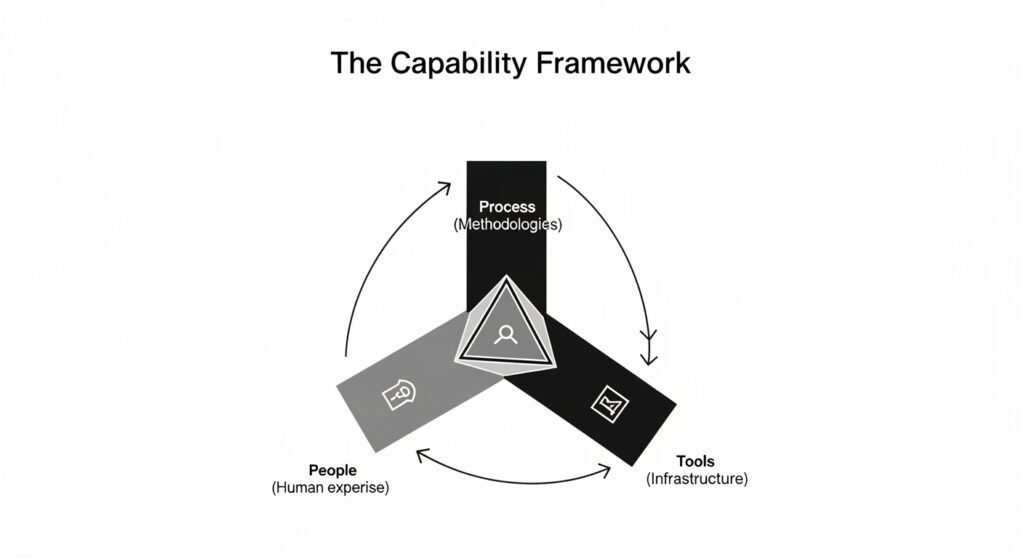
To really understand capability, you have to break it down into three parts. Think of these as the legs of a stool. If one is missing, the whole thing falls over.
- Essential Tools: These are the physical or digital items you need. For a coder, it is a laptop and a code editor. For a barista, it is the coffee machine.
- Efficient Processes: This is the “how-to” guide. It includes the steps like grinding beans or testing software for bugs. Good processes make sure the work is done the same way every time.
- Skilled Personnel: This is the most important part. You need experts who know how to use the tools and follow the processes. Without them, the tools just sit there gathering dust.
Categories of Individual and Team Capabilities
Capabilities are not just about technical work. They cover how we think and how we talk to each other.
- Cognitive Abilities: This includes how you reason and solve problems. It also covers memory and your ability to be creative.
- Physical Abilities: Some jobs need strength and agility. Coordination and flexibility are key for physical tasks.
- Social Skills: This is how you work with a team. It involves communication, empathy, and fixing conflicts.
- Emotional Intelligence: This is about knowing yourself. It includes self-awareness and keeping your cool under pressure.
Defining Capacity: The Volume of Achievement
Capacity is different because it is a measure of total volume. It is the “total amount” that can be produced or contained. Think of a bucket. The size of the bucket is its capacity. You can be the best water-carrier in the world, but you can only carry what the bucket holds. In business, capacity is about meeting objectives within a set timeframe.
- How Much I Can Do: This is the simple way to think about capacity. It is about the quantity of work you can finish.
- Meeting Objectives: Capacity allows a team to fulfill its duties. If the workload is too high, the capacity is exceeded.
- Availability: It is a measure of who is available and for how long.
Managing Finite Resources within Capacity
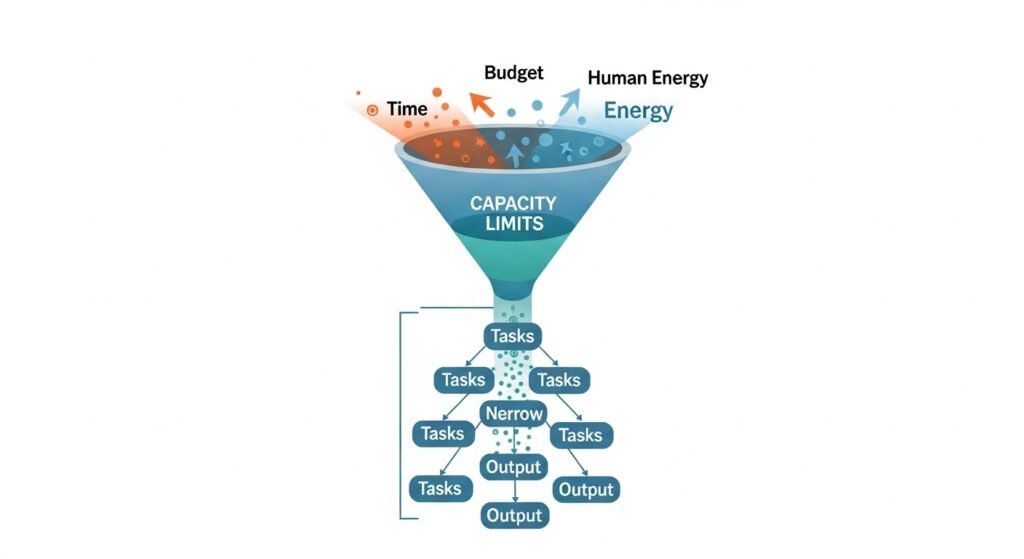
Most parts of capacity are “finite,” which means they run out. You have to manage them very carefully.
- Time Constraints: There are only 24 hours in a day. No matter how smart you are, you cannot work 25 hours.
- Financial Resources: Money is a huge part of capacity. It pays for the people and the tools you need to do the work.
- Human Energy and Health: People get tired. Their mental and physical health sets a hard limit on how much they can do.
- Emotional Capacity: This is your bandwidth for stress. If a team is too stressed, their capacity to handle new problems drops to zero.
Strategies for Building and Enhancing Capacity
If you want to do more, you need to grow your capacity. Many bosses think this just means hiring more people. That is not always the best way. You can also make your current team more efficient. Building capacity is about working smarter so you can handle more work without breaking.
- Optimize What You Have: Look at your current tools and steps. Can they be better?.
- Streamline Everything: Get rid of the junk that slows people down. This lets them do more in the same amount of time.
Up-skilling the Existing Workforce
One of the best ways to boost capacity is through learning. When people get better at their jobs, they often work faster.
- Training Programs: Invest in teaching your team new things. This makes them more valuable and increases what they can produce.
- Mentorship: Let your experts teach the newbies. This spreads knowledge around the company.
- Confidence Boost: When workers know what they are doing, they work with more speed and less fear.
Hiring for Targeted Skill Gaps
Sometimes you just do not have the right talent in-house. This is when you look for new faces.
- Identify Gaps: Look for the specific things your team cannot do. This is your capability gap.
- Strategic Recruitment: Don’t just hire “anybody”. Hire someone who has the exact skill you are missing.
- Future Demands: Think about what you will need next year. Hire people who can help you get there.
Simplifying and Streamlining Workflow Processes
Complex steps are the enemy of capacity. They create bottlenecks where work gets stuck.
- Analyze Workflows: Map out how work moves from start to finish. Find where it gets slow.
- Eliminate Redundancy: If two people are doing the same thing, stop it. This frees up one person to do something else.
- Achieve More with Less: By fixing the process, you can get more done with the same number of people.
Leveraging Advanced Technology and Automation
Technology is a huge force multiplier for capacity. It can do the boring stuff so humans can do the cool stuff.
- Digital Tools: Use software that makes tasks easier. This speeds up the whole team.
- Automation: Let computers handle repetitive tasks. This takes the load off your human staff.
- Focus on Value: When the busy work is automated, people can focus on big ideas and innovation.
Implementing Effective Time Management Techniques
Time is the one thing we cannot get more of. We have to use it perfectly.
- Prioritize Tasks: Figure out what is actually important. Stop wasting time on things that don’t matter.
- Set Realistic Deadlines: Don’t promise things you can’t deliver. This keeps the team from burning out.
- Agile Methodologies: Use frameworks like Agile to move fast and fix things quickly. This reduces delays and keeps work moving.
The Critical Differences Between Capacity and Capability
By now, you see that capacity vs capability are two different animals. You cannot swap one for the other. Understanding these differences is the key to being a great leader. It helps you see the “why” behind your team’s performance.
- Functional vs Quantitative: Capability is about “how well” you do something. Capacity is about “how much” you do.
- Development vs Management: You “develop” a capability by learning. You “manage” capacity by scheduling and planning.
- Performance Environments: Capability is often tested in the “heat of the moment”. Capacity is tested over a long period of time.
- Resource Focus: Capacity is about the physical resources like time and money. Capability is about the mental resources like skill and talent.
| Feature | Capability | Capacity |
| Main Question | What can we do? | How much can we do? |
| Focus | Quality and Skill | Quantity and Volume |
| Growth Method | Training and Learning | Hiring and Efficiency |
| Limit | Knowledge and Tools | Time and Money |
Achieving Synergy: Striking the Optimal Balance
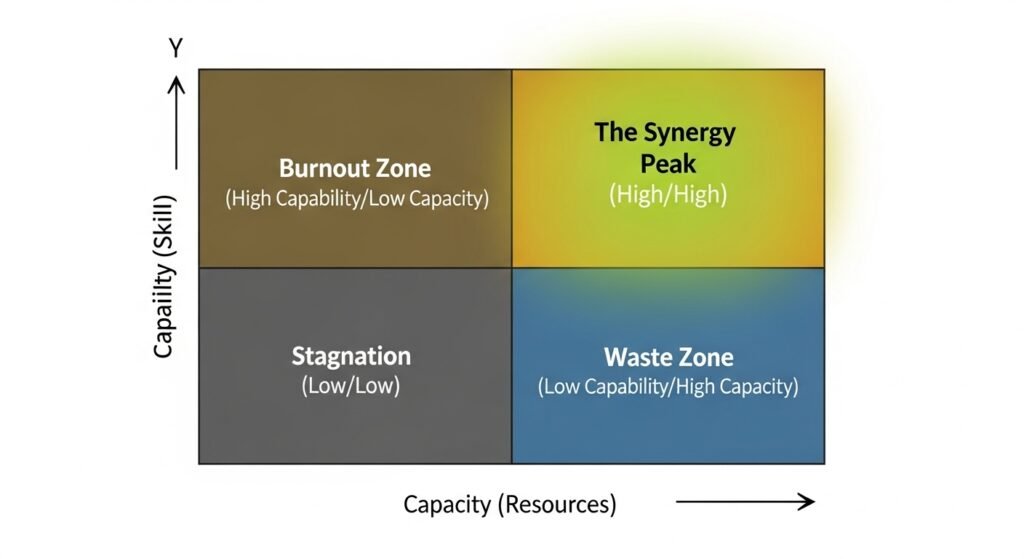
The magic happens when your capacity vs capability are in perfect sync. If they are out of whack, you are going to have a bad time. You need to find the “sweet spot” where your team is skilled enough to do the work and has the time to do it well.
- The High Capability / Low Capacity Trap: Your team is full of geniuses, but they have no time. They will get frustrated because they cannot finish their great ideas. This leads to burnout and missed deadlines.
- The High Capacity / Low Capability Trap: You have tons of people and plenty of time, but no one knows what they are doing. You will end up with a lot of low-quality work. This wastes money and ruins your reputation.
- The Perfect Balance: This is where you want to be. Your team has the skills to do the job right and the time to finish it. This creates a sustainable way to grow.
Revolutionary Approaches to Organizational Development
To really win, you have to think differently about how you run your business. Traditional ways of working are often too slow. You need an “entrepreneurial spirit” to stay ahead. This means being flexible and ready to change when the market changes.
- Transformative Change: Don’t just make small fixes. Look for ways to totally change how you deliver value.
- Agile Practices: Use agile methods to stay responsive. This helps you adjust your capacity vs capability on the fly.
- Clear Communication: Be honest about what your team can and cannot do. This builds trust with your clients and your staff.
- Whole-Hearted Connection: Focus on the people. When people feel connected to their work, their mental and emotional capacity grows.
Comprehensive Checklist for Assessing Capacity vs Capability

Managing a team requires a clear view of both the tools they use and the time they have. This checklist helps you break down the abstract concepts of capacity vs capability into actionable data points. By following these steps, you can identify where your organization is strong and where it is vulnerable to burnout or inefficiency.
Step 1: Evaluating Current Team Capability
Capability is the foundation of your output. Before looking at how much your team can do, you must understand what they are actually qualified to do. This stage focuses on the skill sets and technical proficiencies present in your current roster.
- Inventory Hard Skills: Create a list of all technical requirements for your projects. Cross-reference these with the certifications and proven experience of each team member.
- Assess Soft Skills: Evaluate the emotional intelligence and communication levels within the team. High social capability often makes up for technical gaps through better collaboration.
- Identify Training Needs: Look for areas where the team struggles to complete tasks without outside help. These gaps represent opportunities for development rather than new hires.
- Review Process Maturity: Check if the team follows a standard methodology or if they “wing it” every time. Standardized processes are a key part of organizational capability.
Step 2: Measuring Real-Time Capacity
Once you know what your team can do, you need to measure the space they have to do it. Capacity is often overestimated by leadership, leading to stress. This step requires an honest look at the clock and the available energy.
- Track Utilization Rates: Calculate how many hours are spent on actual project work versus administrative tasks or meetings. If more than 20% of time is spent on “non-work,” your capacity is lower than you think.
- Monitor Energy Levels: Use surveys or 1-on-1 meetings to gauge mental fatigue. High capability cannot overcome a team that is running on an empty emotional tank.
- Audit Resource Availability: Ensure that the tools and budget required are actually accessible. A lack of tools (capability component) directly shrinks your effective capacity.
- Analyze Historical Output: Look at past sprints or projects. Use real data to determine how many “units of work” the team typically finishes in a month.
Step 3: Identifying the Balance and Synergy
The final step is to look at how these two forces interact. The goal is to find the synergy where high capability meets optimized capacity.
- Check for Bottlenecks: Find the points where work piles up. Is it because the person is too slow (capability) or because they have too much on their plate (capacity)?
- Review Technology Impact: Determine if your current software is actually increasing capacity. If a tool takes more time to manage than it saves, it is a drain on your resources.
- Align Goals with Bandwidth: Compare your upcoming strategic goals with the findings from Steps 1 and 2. If the goals require skills you don’t have, focus on capability. If they require more hours than you have, focus on capacity.
- Develop a Growth Roadmap: Create a plan that alternates between building skills and optimizing workflows. This ensures that as you get better, you also get faster.
Conclusion: Future-Proofing Your Strategy
Mastering capacity vs capability is not a one-time thing. It is a constant journey. You have to keep checking in on your skills and your resources. The world moves fast, and what worked yesterday might not work tomorrow. By focusing on both, you build a team that is not just strong, but also resilient.
Remember that your people are your greatest asset. Invest in their learning to grow your capabilities. Fix your processes to grow your capacity. When you do both, you create a powerhouse that can handle anything. Stop choosing between quality and quantity. Build a system that gives you both.
FAQs About Capacity vs Capability
Can you have capacity without capability?
Yes, you can have plenty of time and resources but lack the skills to finish the task. This usually leads to wasted effort.
How do I measure my team’s capability?
You can look at their qualifications, their past results, and the complexity of the tasks they can handle.
Is capacity building just about hiring more people?
No, it is also about making your current processes faster and using better technology.
Why is emotional capacity important?
If your team is mentally exhausted, it does not matter how skilled they are. Their ability to work effectively will crash.
Is it possible for high capability to actually reduce capacity?
Yes, this happens when a highly skilled person becomes a bottleneck because they are the only ones capable of doing a complex task. Because their specific capability is so rare, they often get overwhelmed with requests, which lowers the overall capacity of the team to finish projects. Spreading that knowledge through documentation or cross-training is the only way to fix this.
What is the difference between latent capability and active capability?
Latent capability refers to skills or talents that a person has but is not currently using in their role. Active capability refers to the skills being applied to the job right now. Organizations often have much more power than they realize because they fail to inventory the latent capabilities of their staff.
How does company culture affect emotional capacity?
A toxic culture acts like a leak in your gas tank. Even if your team has the time and the skills, a culture of fear or micromanagement drains their emotional capacity. This makes people feel exhausted before they even start their actual work tasks.
Can capacity be measured in units other than time?
Capacity is often measured in “story points” in agile environments or “units of production” in manufacturing. It can also be measured in bandwidth, such as the number of simultaneous projects a department can manage without a drop in quality.
What is the relationship between capability and innovation?
Innovation is a result of excess capability. When a team is highly skilled and has mastered their current tasks, they have the mental “room” to experiment with new ideas. If capability is just barely meeting the requirements, innovation usually stops.
Does automation improve capability or capacity?
Automation primarily improves capacity by allowing more work to be done in less time. However, it also requires a new capability—the skill to manage and maintain the automation tools themselves.
How do you handle a “capability gap” during a crisis?
In a crisis, you usually do not have time to train people. The fastest way to bridge a capability gap is to bring in outside consultants or freelancers who already possess the specific expertise needed to solve the immediate problem.
What is the “Cap-Cap” trap in startups?
Startups often fall into the trap of having high capability (brilliant founders) but zero capacity (no money or staff). This leads to great ideas that never launch because there aren’t enough hours in the day to build the actual product.
How does physical office space impact capacity?
In physical industries, capacity is often limited by square footage or the number of machines available. Even if you hire more skilled people, they cannot work if there is no desk or equipment available for them to use.
Can a team have too much capability?
Over-qualification can lead to boredom and high turnover. If a team’s capability far exceeds the challenges of their work, they will likely leave for more stimulating environments. It is important to match the level of skill to the difficulty of the task.
What is the impact of “shadow work” on capacity?
Shadow work includes hidden tasks like fixing old bugs, answering endless emails, or attending unnecessary meetings. This work eats up capacity without being recorded in project plans, often making a team look less productive than they actually are.
How do you explain capacity vs capability to a client?
Tell the client that capability is your promise of quality, while capacity is your promise of a deadline. If they want it “better,” you need more capability. If they want it “sooner,” you need more capacity.
What role does leadership play in building organizational capability?
Leaders are responsible for the “process” part of capability. By creating clear frameworks and providing the right tools, leaders make it easier for skilled people to apply their talents effectively.
Is personal capacity the same as “work-life balance”?
They are closely related. Work-life balance is the practice of protecting your personal capacity. If you use all your capacity at the office, you have nothing left for your family or your health, which eventually causes your work capability to suffer too.
How does remote work change team capacity?
Remote work often increases capacity by removing commute times and office distractions. However, it can decrease capability if the team lacks the communication tools or digital skills needed to collaborate effectively from a distance.
What is “surge capacity” in business?
Surge capacity is the ability of a team to work at 110% for a very short period, like during a product launch. This is not sustainable and must be followed by a period of “recharge” to prevent permanent damage to the team’s health.
How do you identify a capability wall?
You hit a capability wall when no amount of extra time or money fixes a problem. If the team is working 60 hours a week and the project still isn’t moving, the problem is likely a lack of specific knowledge or a broken process.
Can capability be “bought” through technology?
Technology can provide a temporary boost, but true capability requires the human skill to use that technology. Buying a high-end camera doesn’t make you a photographer; it just gives you the tool to become one.
How do you prioritize between building capacity and capability?
If you are missing deadlines but the work is good, focus on capacity. If you are hitting deadlines but the work is poor or being returned for fixes, focus on capability.
What is the long-term risk of ignoring capacity?
Ignoring capacity leads to “burnout-induced capability loss.” When people are overworked for too long, their brain function, creativity, and technical accuracy decline, meaning they actually lose the capabilities they once had.