
Market led proposals are the secret sauce for fixing our aging public infrastructure. They let private companies bring fresh ideas to the table without waiting for a government invite. Think of it as a business telling the city how to solve a problem they didn’t even know they had yet. This proactive strategy is a game changer for smart cities and renewable energy.
Understanding the Essence of Market Led Proposals
Market led proposals, often called unsolicited proposals, happen when the private sector spots a public need. They don’t wait for a formal government request or tender to act. Instead, they pitch a unique solution directly to the authorities. This approach cuts through the usual red tape and puts innovation first.
The core mechanism of these proposals is simple and effective. It connects the smart ideas of private businesses with what the government actually needs. This partnership helps deliver essential services faster and better than old-school methods. It is all about making sure the public gets the best possible results.
The scope of these projects is huge and covers many areas. You can find them in digital infrastructure and green energy projects. They also pop up in goods purchases and basic public service delivery. Any area where the public needs help is a candidate for this model.
We are seeing a massive shift in how procurement works today. Governments used to be reactive and only ask for help when things broke. Now, private companies are proactive and offer solutions before problems get worse. This shift leads to much better public architecture and service delivery.
The Strategic Importance of Market Led Proposals in Modern Governance
Bringing in cutting-edge technology is one of the biggest wins here. These proposals help cities adopt smart lighting and IoT sensors very quickly. You don’t have to wait years for a traditional tender process to finish. It makes our cities smarter and more efficient right now.
- Faster Integration: High-tech tools get used in the real world much sooner.
- Smart Cities: Digital infrastructure becomes the backbone of modern living.
- Agile Tech: AI-driven business intelligence helps governments make better choices.
Fostering a culture of innovation is another major benefit. Private agencies can put forward wild ideas that a government office might never think of. This keeps things fresh and pushes the boundaries of what is possible. It moves us past the boring, standard ways of doing things.
The public-private relationship gets a serious boost from this model. It creates a team vibe where everyone works toward the same goal. As user expectations go up, this teamwork becomes even more vital. It helps bridge the gap between what people want and what the state can provide.
Fiscal responsibility is a huge deal for every taxpayer. Market led proposals often involve a shared risk model that protects public funds. Private companies often bring their own money to the table to start things off. This means the government can do more without raising taxes or going into debt.
These projects also act as a powerful economic stimulus. They create jobs in construction, tech-agriculture, and maintenance. Local industry grows because there is a new way to get projects moving. It is a win-win for the economy and the community at large.
Global Adoption and Policy Frameworks
The momentum for market led proposals is growing across the globe. Countries like the United Kingdom and New Zealand use them to fix transport issues. They see it as a robust strategy to keep their nations competitive. It is becoming the go-to move for fast-moving economies.
Australia is a world leader in making these proposals work well. The Northern Territory and Western Australia have very clear rules for them. They use a specific policy framework to make sure everything is fair. This gives businesses a clear map of how to succeed.
The United States is also getting in on the action for big projects. Many states use unsolicited proposals for massive transportation and energy jobs. It helps them bypass slow bureaucratic processes that hold back progress. Federal agencies are starting to see the value in this private sector engagement.
Competitive neutrality is a key part of these global policies. Even if a proposal is unique, the government must ensure it is fair. They use strict assessment criteria to keep things transparent. This prevents any one company from getting an unfair leg up on others.
Main Elements of a Robust Market Led Proposal
Executive Summary
- Clear Vision: A short and punchy overview of what you want to do.
- Key Goals: Highlighting the main objectives and how they help the public.
- Value Proposition: Explaining exactly why this deal is better than others.
Identification of Public Needs
You need to prove there is a real gap in current services. Use local sales data and community feedback to show what is missing. It is about finding the unmet needs that nobody else is fixing yet. This makes your proposal much more convincing to decision-makers.
Technical Proposed Solution
- Innovation: Show off your disruptive solutions and high-tech tools.
- Details: Give a full description of the infrastructure or service you are building.
- Scalable Design: Make sure your idea can grow as the city grows.
Detailed Implementation Plan
A good plan needs a solid timeline and clear resource allocation. You must show who is doing the work and how they will get it done. Include logistics optimization to keep costs low and efficiency high. This proves you are ready for the real world.
Budget and Financial Analysis
Transparency is the name of the game when it comes to money. You must provide a full breakdown of capital and operational costs. Show the expected return on investment for both you and the government. This builds trust and shows the project is financially sustainable.
Risk Assessment and Mitigation Strategies
- Identify Risks: Be honest about financial or environmental dangers.
- Contingency Plans: Show exactly how you will fix problems if they happen.
- Confidence Building: Prove that you have thought of everything to protect the public.
Benefits and Impact Assessment
You need to quantify the social and economic impact of your work. Use KPIs to show how you will measure success over time. Make sure your project aligns with national priorities and environmental goals. This shows you care about the long-term future of the community.
The Standardized Procedure of an MLP
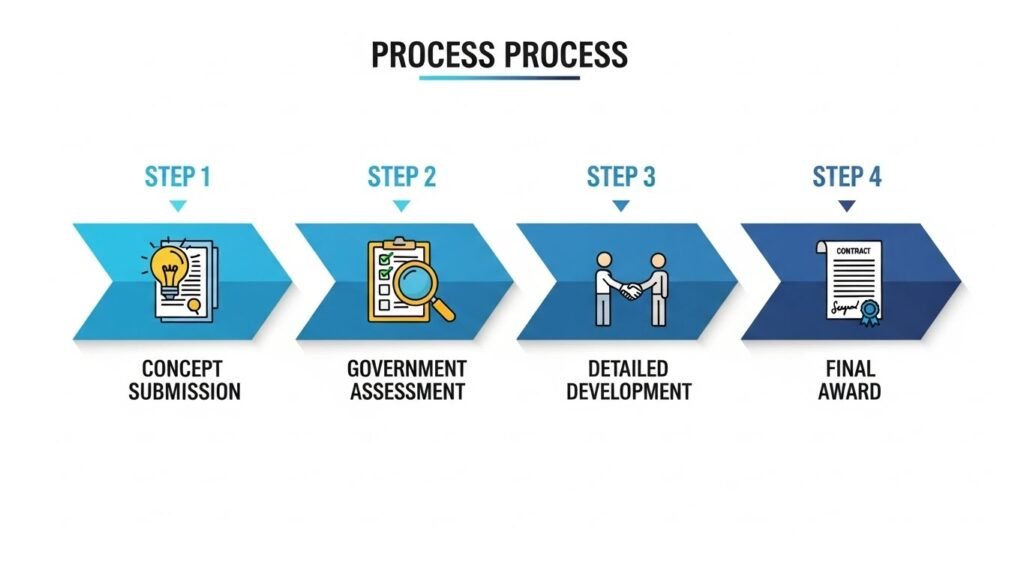
Phase 1: Initial Submission and Concept Development
The first step is filling out a concept proposal template. This is where you pitch your core idea and check if it fits the rules. You must meet the basic eligibility criteria to even get in the door. It is your chance to make a great first impression.
Phase 2: The Assessment and Evaluation Phase
The government will now put your idea through a rigorous assessment process. They look at the value for money and the public benefits. If your idea isn’t unique or doesn’t help people, it gets rejected. Only the best ideas move past this gate.
Phase 3: The Development and Collaborative Phase
If you pass the test, you move into the development phase. You and the government work together to refine the business case. This is a collaborative effort to make the project “tender-ready”. It ensures everyone is on the same page before construction starts.
Phase 4: Final Negotiation and Award
The final stage is where you iron out all the commercial terms. You set the final performance KPIs and sign the contracts. This turns your proposal into an official project that can start operating. It is the finish line for the proposal and the start of the work.
Steps Involved in Developing an Effective MLP for Private Entities
Finding the right opportunity is the first real challenge. You should watch government policy changes and spot where they are struggling. Look for market gaps where your tech or skills can provide a fix. This proactive search is what sets successful companies apart.
- Policy Monitoring: Stay updated on what local leaders are talking about.
- Expertise Leverage: Use what you are best at to solve a public problem.
- Pain Points: Focus on the things that annoy citizens or cost the state too much.
Crafting the business case is where you prove your value. You have to show that your solution is better than anything else out there. Use data-driven strategies and customer insights to back up your claims. It must be a clear “Value for Money” win for the taxpayer.
Navigating the legal and regulatory world is a must. Your proposal has to follow all the procurement laws and safety rules. You also need to protect your intellectual property during the talks. This keeps your secrets safe while you try to win the deal.
Understanding the approval labyrinth is the final hurdle. You need to know which departments will review your work and what they care about. Identify the key decision-makers and what their priorities are. Knowing the map helps you get to the finish line much faster.
Advanced Strategies for Proponents: Securing Approval
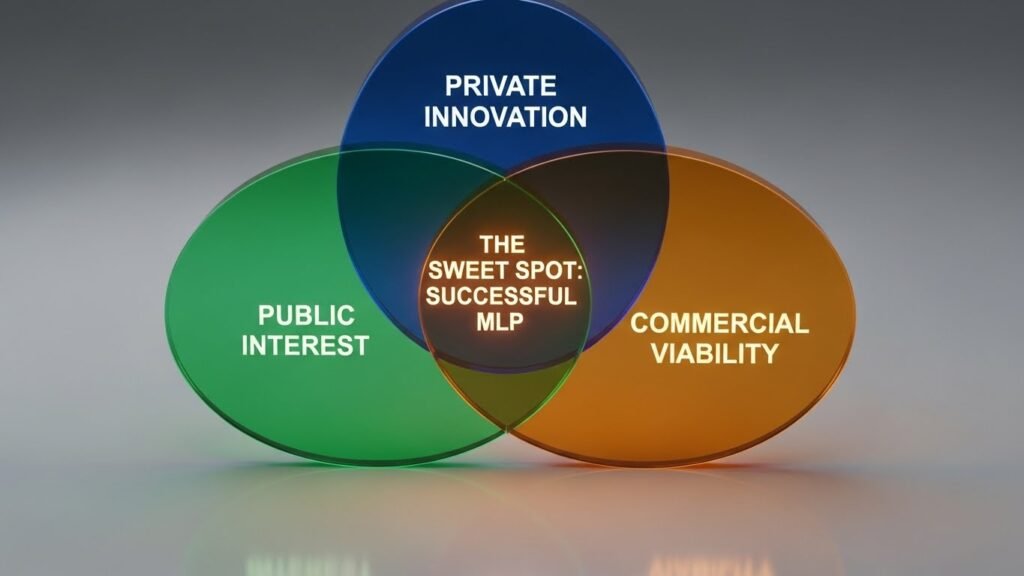
Proving you have a “unique value” is the best way to win. If you have an asset or tech that nobody else has, the government might not need a tender. This is called exclusive negotiation and it is a huge advantage. Highlight your intellectual property as a major barrier for any competitors.
Stakeholder engagement is about winning hearts and minds. You should talk to the community and get them on your side early. If the public likes your idea, the politicians are more likely to say yes. Managing those relationships is just as important as the tech itself.
- Community Support: Show people how the project makes their lives easier.
- Political Alliances: Find leaders who share your vision for the future.
- Public Consultation: Listen to feedback and adjust your plan to fit local needs.
Financial engineering can make or break a big deal. Look into Public-Private Partnerships (PPP) to share the costs. Use innovative financing models that provide a good return for investors. A solid financial plan makes the project look much safer to the government.
Government Evaluation: What Decision Makers Look For
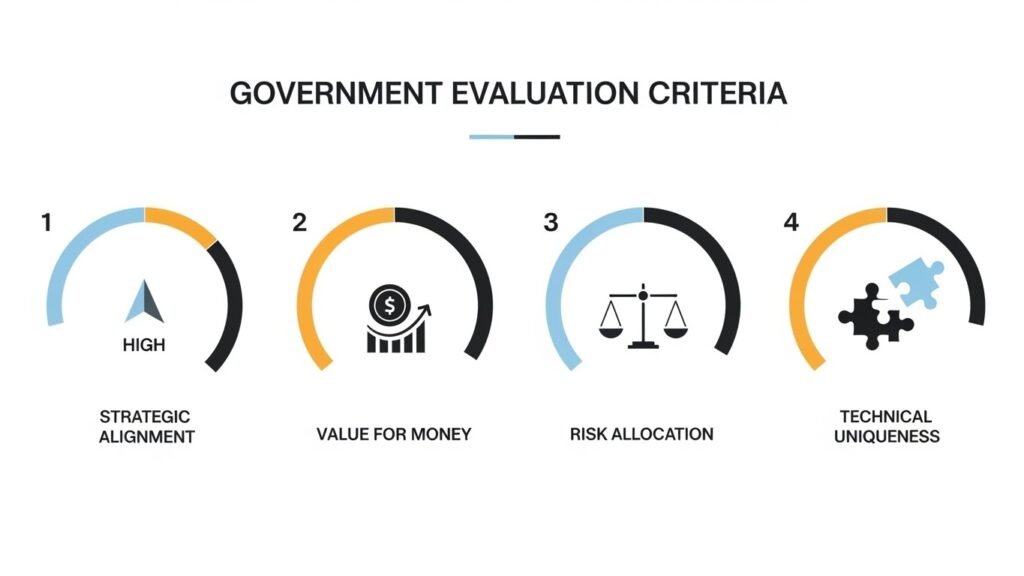
Strategic alignment is the first thing a government looks at. Your proposal must fit into their current master plan for the region. If you want to build a bridge, it better be in a place where they want a bridge. It has to support the overall goals of the administration.
- National Priorities: Align your work with what the country needs most.
- Local Plans: Ensure your project fits into the city’s vision for growth.
- Social Impact: Focus on health trends and community well-being.
Financial viability and sustainability are non-negotiable. The state needs to know you won’t go bust halfway through the project. They will check your balance sheet and your track record on other jobs. Proving you can handle the long-term work is essential for success.
The public interest test is the final judge of your proposal. The government must balance your profit with the benefits to the citizens. They want to see high service quality and fair prices for the users. If the project isn’t good for the people, it won’t happen.
Ethical Considerations and Transparency
Avoiding corruption and favoritism is critical for trust. Governments often use probity advisors to keep everything above board. They need a clear audit trail to show the public why they picked your proposal. This prevents any claims of “backroom deals” or unfair treatment.
- Probity Advisors: Third-party experts who watch the process for fairness.
- Audit Trails: Keeping records of every meeting and decision made.
- Public Scrutiny: Being ready to explain the deal to the media and voters.
Managing the unsolicited nature of these deals is a delicate dance. Sometimes the government will use a “Swiss Challenge” to see if others can do it better. This protects the “first mover” but keeps the market competitive. It is all about finding the right balance between speed and fairness.
Challenges and Success Factors in the MLP Ecosystem
Private agencies often fall into common pitfalls during the process. Many underestimate how slow and complex government bureaucracy can be. Others fail to align their pitch with the current political cycle. If you pitch a project during an election year, things can get very messy.
The need for transparency cannot be overstated for these deals. If the public thinks a deal is secret, they will likely oppose it. You must be open about the benefits and the costs from the very start. Regular updates and clear communication are your best friends here.
A cohesive policy framework is what makes the whole system work. Governments need a “single door” approach so businesses know exactly where to go. This stops different departments from giving conflicting advice. It makes the whole journey smoother and more predictable for everyone involved.
Case Studies: Real-World Impacts of Successful MLPs
The West Gate Tunnel Project in Victoria is a huge success story. Transurban proposed a plan to fix traffic in Melbourne and it worked. It is a perfect example of how private insight can solve a massive urban mobility problem. This project improved commutes for thousands of people every day.
- Infrastructure Wins: Major highways and tunnels built through private initiative.
- Digital Transformation: Smart city platforms that manage data for whole cities.
- Energy Projects: Massive wind and solar farms proposed by green energy firms.
We can also learn a lot from projects that didn’t make it. Some MLPs fail because they lack proper funding or the political winds shift. Others get rejected because they don’t offer enough value for money to the state. These failures help refine the rules for future proposals.
Final Summary and the Future of MLPs
The strategic impact of market led proposals is only going to grow. They foster a healthy and innovative relationship between the public and private sectors. By working together, we can solve complex market requirements much faster. It is the best way to build a future that works for everyone.
We are seeing a major rise in sustainable and green MLPs. Companies are pitching carbon-neutral infrastructure and environmentally-friendly solutions. This aligns with global goals to fight climate change and protect the planet. The future of public projects is definitely going to be much greener.
In our post-digital world, these proposals are a vital tool for growth. They allow us to use emerging technologies to fix old-school problems. As long as there are gaps in the market, there will be room for a good proposal. Market led proposals are the key to building the cities of tomorrow today.
FAQs on Market Led Proposals
What is a Swiss Challenge in the context of an MLP?
A Swiss Challenge is a public procurement process where the government receives an unsolicited bid for a project and then invites third parties to match or exceed it. This ensures the market remains competitive while still acknowledging the original proponent’s effort. If a third party provides a better bid, the original proposer often has the “right of first refusal” to match that new offer.
How does intellectual property protection work during negotiations?
Protecting intellectual property is a major concern for private firms sharing secret tech with the government. Usually, the parties sign a Non-Disclosure Agreement (NDA) before any deep details are shared. The government must agree not to use the specific “secret sauce” of the proposal if they decide to go with a different vendor later on.
Can an MLP be submitted for social services rather than just physical infrastructure?
Yes, market led proposals are not just for bridges and roads. They can cover healthcare initiatives, educational software, or community safety programs. Any service that helps the public and can be delivered more efficiently by a private partner is fair game for a proposal.
What is the typical timeline from submission to contract award?
The timeline varies wildly depending on the size of the project, but most take between 12 to 24 months. Smaller tech-based projects might move faster, while massive construction jobs require years of environmental and financial planning. It is a marathon, not a sprint.
What are the main reasons the government might reject a proposal immediately?
The most common reason for an “instant no” is a lack of alignment with current government priorities. If the state is focused on schools and you pitch a luxury marina, it likely won’t pass. Other reasons include a lack of unique value or the project requiring too much public money.
How do MLPs handle environmental impact assessments?
Even though the project starts with a private company, it must still follow all local environmental laws. The proponent is usually responsible for funding and conducting the required impact studies. The government then reviews these studies to ensure the project won’t harm the local ecosystem.
What happens if a government official has a conflict of interest?
Strict probity rules are in place to prevent “inside jobs” or favoritism. Any official with a link to the proposing company must recuse themselves from the evaluation process. This keeps the process clean and ensures the public can trust the final decision.
Are small businesses and startups eligible to submit MLPs?
Technically, anyone can submit a proposal, but the barrier to entry is high. Startups often partner with larger, established firms to prove they have the financial backing to finish the job. The government needs to see a solid track record before they hand over a public contract.
Can a government cancel an MLP halfway through the process?
Yes, the government usually reserves the right to stop the process at any time if it is no longer in the public interest. This can happen if the political climate changes or if the project’s costs start to spiral out of control. Proponents usually bear their own costs if a project is canceled early.
How is “Value for Money” actually measured?
Value for money isn’t just about the lowest price. It looks at the quality of the service, the risks the private sector is taking on, and the long-term benefits for the community. A project that costs more upfront but lasts twice as long might offer better value than a cheap, short-term fix.
Do market led proposals lead to higher costs for the public?
Not necessarily. While the private firm needs to make a profit, they often find efficiencies that the government cannot. By using better technology and tighter management, they can often deliver the service at a lower total cost to the taxpayer over the life of the project.
Is there a fee to submit a market led proposal?
In most cases, there is no direct fee to submit a concept, but the costs of preparing a detailed proposal can be massive. The private company pays for all the research, legal fees, and technical drawings themselves. This acts as a natural filter to ensure only serious players apply.
How do MLPs impact local employment?
Most government contracts include clauses that require a certain percentage of the workforce to be hired locally. This ensures that the community doesn’t just get a new bridge, but also gets a boost in jobs and local skill development.
What role do lobbyists play in the MLP process?
While lobbyists can help navigate the bureaucracy, most modern MLP policies try to limit their influence. The goal is to have the proposal stand on its own technical and financial merits. Official “single-door” intake processes help ensure everyone follows the same path regardless of who they know.
Can an MLP be used for the sale of public land?
Sometimes, an MLP involves the purchase or lease of government-owned land for development. However, these are highly scrutinized to ensure the land is being sold at a fair market price. The proposal must show that the development will provide a major public benefit beyond just the sale price.
How do proponents handle the “first mover” risk?
The first mover risk is the danger of a company doing all the hard work only for the government to give the contract to someone else. To mitigate this, some policies offer the original proponent a small advantage in the final tender or allow them to recover some of their planning costs.
What is a “Single Door” intake process?
A single door process means there is only one specific department or office that handles all MLP submissions. This prevents companies from “shopping around” different departments to find a friendly official. It ensures a consistent and fair evaluation for every idea.
How does the government ensure service quality after the project is built?
The contract usually includes strict KPIs (Key Performance Indicators). If the private operator fails to meet these standards—like allowing too many potholes on a toll road—they may face heavy fines or lose the contract entirely.
Are the results of MLP evaluations made public?
Yes, once a deal is signed, most governments are required to publish the contract and the summary of the evaluation. Transparency is vital to show that the public interest was protected and that the deal was fair.
What is the difference between an MLP and a Joint Venture?
An MLP is a proposal from one side to the other to start a project. A Joint Venture is a specific legal structure where the government and the private company share ownership and control of the project. An MLP might lead to a Joint Venture, but they are not the same thing.