
Mathematical skills are a huge deal in the modern world of work. Many people think math is just for engineers or scientists. In reality, being good with numbers is a key soft skill for everyone. Knowing your way around a calculator can help you move up in your career. It also helps you work much faster and better. When you master workplace readiness math using overtime and percents, you take control of your professional life.
There is a big gap in math skills across the current workforce today. This gap often leads to confusion about paychecks and job readiness. Some people miss out on higher salaries because they struggle with basic arithmetic. Learning these foundational skills is the best way to bridge that gap. It turns a basic job into a path for strategic career growth.
The Critical Role of Mathematics in the Modern Workforce
Being good at math makes you stand out to your boss. It shows that you are ready for more responsibility. Math is not just a hard technical skill anymore. It is now seen as a vital soft skill for success. If you can handle numbers, you can handle a promotion.
- Career Advancement: Employees with strong math skills often get promoted faster than others.
- Workplace Efficiency: Doing math quickly helps you finish tasks without making costly mistakes.
- Salary Impact: Understanding pay structures helps you negotiate for the money you deserve.
- Job Readiness: Knowing how to calculate your own worth makes you a more confident worker.
When you learn workplace readiness math using overtime and percents, you gain power. You can check your own pay stub for errors. You can also plan your monthly budget with total confidence. This kind of financial literacy is essential for every adult. It helps you stay ahead of the game in a competitive world.
Foundational Mathematical Concepts for Professionals
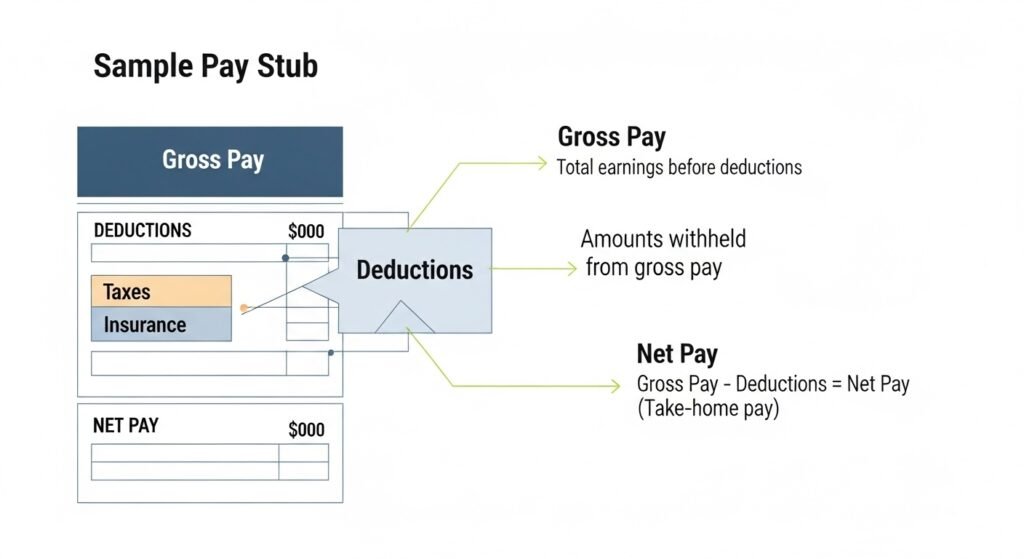
Basic math is used every single day in almost every office. You might use addition to sum up your weekly hours. You use subtraction to see how much tax was taken out. Multiplication helps you figure out your gross pay for the month. Division is great for finding your average daily output or rate.
Accuracy is the most important part of workplace numeracy. If a manager makes a mistake on payroll, trust is broken. Employees want to know their compensation is fair and transparent. Using math correctly ensures that everyone is on the same page. It keeps the workplace running smoothly and keeps everyone happy.
- Addition: Summing up daily work hours to reach a weekly total.
- Subtraction: Calculating the difference between gross pay and net pay.
- Multiplication: Figuring out total earnings by multiplying the hourly rate by hours.
- Division: Splitting up a project budget across several different weeks.
Modern jobs require data-driven decision-making to be successful. You cannot just guess how a project is going anymore. You need to look at the numbers to see the truth. Quantitative reasoning helps you solve problems before they become big issues. It is the best way to prove your ideas actually work.
The Framework of Workplace Assessments
Many companies use tests to see if you have the right skills. One of the most famous tests is called the WorkKeys evaluation. This test checks your ability to use math on the job. It looks at how you solve real problems with numbers. Passing these tests is a big step toward getting hired.
Employers use these assessments to find any skill gaps in their team. They want to know exactly what you need to learn next. This helps them design the right vocational training for you. It also helps them see if you are a good fit. Knowing what to expect on these tests gives you a big advantage.
- Standardized Testing: Tests like WorkKeys measure your math competency for specific roles.
- Skill Identification: Assessments show which areas of math you need to practice more.
- Training Needs: Companies use test results to plan their professional development programs.
- Candidate Selection: High scores can help you land a job over other candidates.
Applied mathematics is very different from what you learned in school. In school, you just solved problems out of a textbook. At work, the problems involve real money and real people. You have to use your math skills to navigate complex situations. This is what people mean when they talk about workplace readiness.
Mastering Overtime Calculations and Labor Compliance
Legal Standards and Definitions
Labor laws are in place to protect your time and money. The Fair Labor Standards Act, or FLSA, is the main law. It sets the rules for how much people should be paid. It also says when an employer must pay you extra. Knowing these rules is a key part of financial literacy.
- FLSA: The federal law that governs wages and overtime pay in the USA.
- Non-Exempt: Employees who are eligible for overtime pay under the law.
- Workweek: A fixed period of 168 hours or seven consecutive 24-hour periods.
- Compliance: Following the law to avoid legal trouble and pay employees fairly.
HR professionals use workplace readiness math using overtime and percents every day. They have to make sure every paycheck follows federal and state laws. If they make a mistake, the company could face big fines. This is why math is so important for administrative roles. It keeps the company safe from legal headaches.
The Mechanics of Overtime Pay
Overtime pay is usually called time-and-a-half by most workers. This means you get paid your regular rate plus half more. If you work more than 40 hours, those extra hours are worth more. It is a great way to boost your total earnings. You just need to know how to calculate it correctly.
- The Multiplier: Standard overtime is calculated by multiplying your rate by 1.5.
- The Formula: (Hourly Rate x 1.5) x Overtime Hours = Overtime Pay.
- Double Time: Some companies pay 2.0 times the rate for holidays or Sundays.
- Gross Pay: Your total pay before any taxes are taken out of it.
Sometimes your pay is more complex than a simple hourly rate. You might get a shift differential for working late at night. You might also earn a bonus for hitting a specific goal. These extra payments must be added to your regular rate for overtime. This ensures that your overtime pay is truly fair.
Avoiding Common Calculation Pitfalls
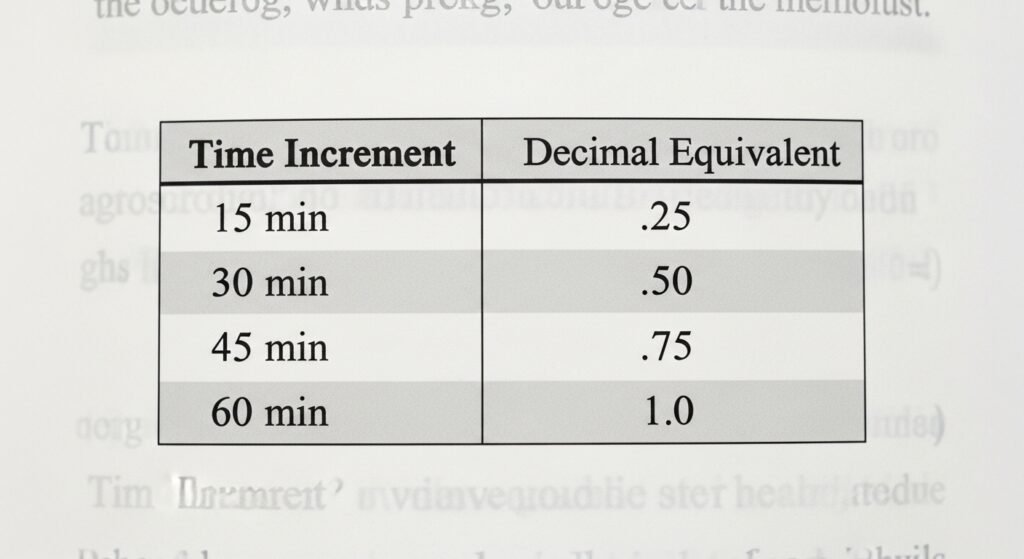
One of the biggest mistakes people make is with decimal conversions. People often think that 30 minutes is 0.3 hours on a calculator. However, 30 minutes is actually 0.5 hours because it is half. Using the wrong decimal can lead to getting paid less money. Always double-check your conversions before submitting your hours.
- 15 Minutes: Use 0.25 when doing math for a quarter hour.
- 30 Minutes: Use 0.50 when doing math for a half hour.
- 45 Minutes: Use 0.75 when doing math for three-quarters of an hour.
- Rounding: Always follow your company policy on rounding minutes up or down.
You also need to know what counts as actual work hours. Mandatory training sessions are usually part of your paid work time. Travel time between different job sites also counts toward your total. Some people forget to add these hours and lose out on overtime. Keeping your own log of hours is a very smart move.
Percent Calculations in Professional Settings
Essential Percentage Formulas for Daily Tasks
Percentages are everywhere in the business world today. You use them to find a part of a much larger whole. If you work in sales, you need to calculate your commission. This is usually a small percentage of the total sales you made. Understanding this math helps you track your own performance.
- Finding Percent: (Part / Whole) x 100 gives you the percentage.
- Commission: Multiply the total sales by the commission rate percentage.
- Discounts: Subtract the discount percentage from the total price of an item.
- Growth: Use percentage change to see how much your skills have improved.
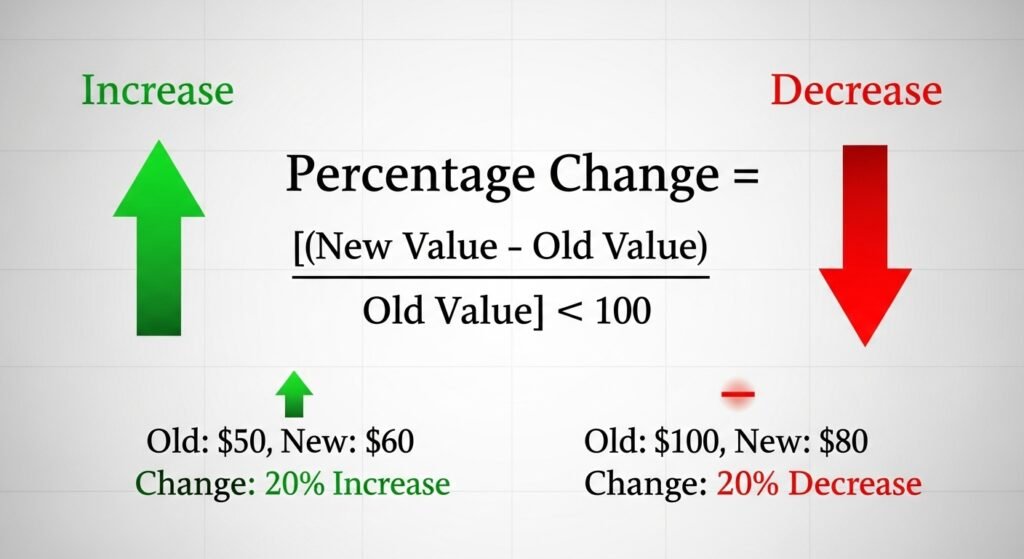
A percentage increase or decrease is great for looking at trends. If you get a raise, you want to know the percentage. This helps you see how much your buying power has grown. Managers also use these formulas to look at department budgets. It is the best way to see the big picture.
Applied Percentages in Compensation and Benefits
Your salary is not just the money in your bank account. Total job benefits include things like insurance and retirement plans. Most of these benefits are calculated using percentages of your pay. For example, you might put 5% into a 401(k) plan. Knowing this math helps you plan for your long-term future.
- Raise Calculation: (New Salary – Old Salary) / Old Salary x 100.
- Insurance Premiums: The percentage of your pay that goes toward health coverage.
- Retirement Match: How much your company adds based on your contribution percent.
- Tax Withholding: The percentage taken out by the government for federal and state taxes.
Taxes can be very confusing if you do not know math. Your tax bracket is based on a specific percentage of your income. If you earn more money, that percentage might actually go up. Understanding these brackets helps you estimate your true take-home pay. This is often called your net pay after all deductions.
Strategic Math for Business Operations
Job Costing and Resource Allocation
Companies need to know if they are actually making money. Job costing is a way to see how much a project costs. It includes the wages of everyone working on that specific task. It also includes the cost of materials and overhead expenses. If the math does not add up, the company might lose money.
- True Cost: The base salary plus benefits and taxes for an employee.
- Labor Allocation: Deciding how many people should work on a specific project.
- Productivity: Comparing the cost of labor to the total output produced.
- Efficiency: Finding ways to do the same work for a lower total cost.
Resource allocation is all about moving people to where they are needed. Managers use math to see which teams are over-worked or under-worked. They look at productivity metrics to make these important decisions. If you understand these metrics, you can show your value to the team. It helps you become a key player in the organization.
Budgeting and Performance Metrics
Every department has a budget that they must strictly follow. Budget planning involves looking at past spending and future needs. You have to use percentages to see where most of the money goes. This helps leaders decide which projects to fund next year. It is a very important part of professional growth.
- KPIs: Key Performance Indicators that measure how well a team is doing.
- Variance: The difference between what was budgeted and what was spent.
- Forecasting: Predicting future costs based on current trends and data.
- Reporting: Explaining the numbers to bosses using clear charts and tables.
| Metric Type | Common Example | Formula Used |
| Productivity | Units per hour | Total Units / Total Hours |
| Financial | Profit Margin | (Revenue – Cost) / Revenue |
| Payroll | Overtime Ratio | Overtime Pay / Total Payroll |
Tools and Technology for Mathematical Accuracy
Leveraging Spreadsheet Software
You do not have to do all this math in your head. Tools like Excel or Google Sheets are a lifesaver for pros. You can set up a spreadsheet to do the math for you. This reduces the chance of making a silly human error. It also saves you a massive amount of time every week.
- Formulas: Preset codes that tell the software to add or multiply cells.
- Templates: Reusable files for payroll or project tracking tasks.
- Automation: Letting the computer handle repetitive math automatically.
- Charts: Turning boring numbers into easy-to-read visual graphics.
Learning how to use these tools is part of upskilling. Most high-paying jobs require some knowledge of spreadsheets today. You can take online classes to learn the basics in a few days. This makes you much more valuable to any potential employer. It is one of the best technical skills you can have.
Specialized Workforce Management Apps
Many companies now use apps to track time and pay. These apps are designed to handle workplace readiness math using overtime and percents. They calculate taxes and deductions as soon as you clock out. This makes the whole payroll process much faster and more accurate. It also creates a digital trail for auditing purposes.
- Time Tracking: Apps that let you clock in and out on your phone.
- Payroll Automation: Systems that send money directly to your bank account.
- Transparency: Allowing employees to see their earnings in real-time.
- Audit Trail: A clear record of every calculation made for legal safety.
Using these apps reduces the need for paper records. It is better for the environment and much harder to lose. Most modern HR teams prefer these digital workflows over older methods. Staying current with this tech is vital for your professional development. It shows that you are ready for a modern workplace.
Strategies for Continuous Improvement and Upskilling
Identifying Personal Growth Areas
The first step to getting better is knowing what you don’t know. Take a moment to look at your current math skills honestly. Are you confused when you see your pay stub? Do you struggle to find the percentage of a number? Identifying these gaps helps you focus your learning time. It is the start of your journey toward math competence.
- Self-Assessment: Taking a practice test to see where you stand right now.
- Goal Setting: Deciding exactly which math skills you want to master first.
- Feedback: Asking a mentor or boss for areas where you can improve.
- Resource Hunting: Finding books or videos that explain math in simple terms.
Upskilling is not a one-time thing you do at school. It is a lifelong learning process that keeps you relevant. The world of work is always changing, and math stays important. Making time for professional development shows that you have a growth mindset. Employers love workers who always want to learn more.
Practical Training Methods
The best way to learn math is by doing it every day. You can use your own life as a training ground for these skills. Look at your grocery receipts or your monthly utility bills. Try to calculate the tax or the percentage of increase yourself. This makes the math feel real and useful to you.
- Real-World Scenarios: Using your own pay stub to practice overtime math.
- Soft Skill Integration: Learning how to explain your math to other people.
- Daily Practice: Spending ten minutes a day on basic arithmetic problems.
- Workshops: Attending local classes or webinars on financial literacy.
When you can explain a calculation to someone else, you really know it. This is where math meets soft skills like communication. You might need to explain a budget change to your team one day. Being clear and confident makes people trust your leadership more. It turns a technical skill into a powerful social tool.
The Intersection of Math and Professional Empowerment
Mastering workplace readiness math using overtime and percents gives you a voice. You no longer have to wonder if your boss is paying you correctly. You can walk into a meeting with data to support your points. This level of confidence is what leads to real career empowerment. It allows you to advocate for yourself during salary negotiations.
- Self-Advocacy: Using math to prove why you deserve a higher salary.
- Financial Wellness: Managing your money better to reduce stress and anxiety.
- Confidence: Feeling ready to take on bigger projects and leadership roles.
- Long-term Growth: Building a foundation that supports your career for years.
Practical Workplace Math Worksheet: Overtime and Percentages
To solidify your understanding of workplace readiness math using overtime and percents, it is helpful to walk through a practical exercise. This worksheet is designed to simulate real-world scenarios you might encounter on a pay stub or during a performance review. By completing these calculations manually, you build the “muscle memory” needed to spot errors and advocate for your financial rights.
Section 1: Overtime Pay Calculation
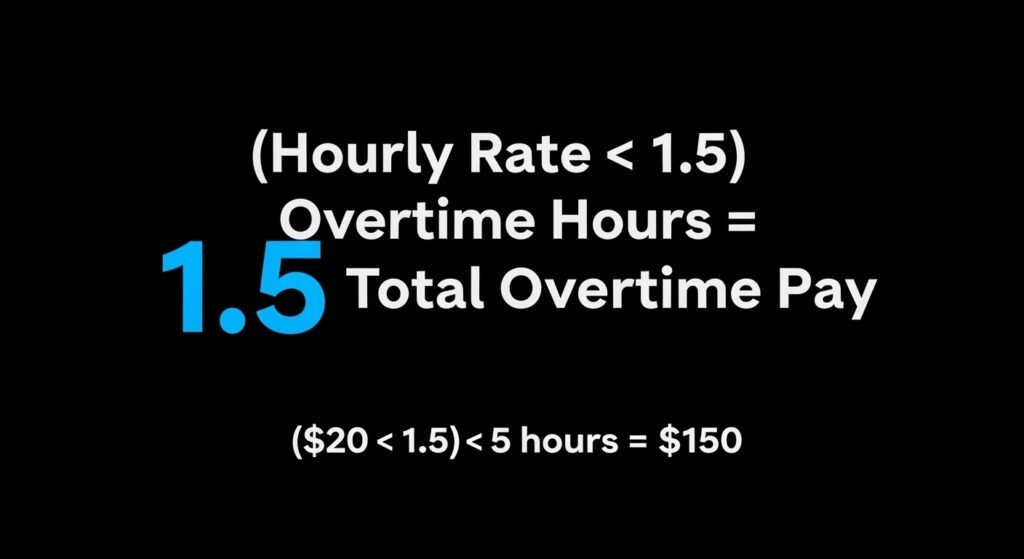
In this scenario, an employee earns a regular hourly rate of $22.00. During a busy week, they worked a total of 47 hours. Follow the steps below to determine their gross pay.
- Identify Regular Hours: The first 40 hours are paid at the regular rate.
- Calculate Regular Pay: Multiply 40 hours by $22.00. This equals $880.00.
- Identify Overtime Hours: Subtract 40 from the total hours (47 – 40 = 7 hours).
- Determine Overtime Rate: Multiply the regular rate by 1.5 ($22.00 x 1.5 = $33.00).
- Calculate Overtime Pay: Multiply the 7 overtime hours by the $33.00 rate. This equals $231.00.
- Find Total Gross Pay: Add the regular pay and the overtime pay together ($880.00 + $231.00 = $1,111.00).
Section 2: Salary Increase and Percentage Change
Imagine you have been at your job for one year and receive a performance-based raise. Your current annual salary is $45,000, and your boss offers you a new salary of $48,150. Use the percentage change formula to understand your raise.
- Find the Difference: Subtract the old salary from the new salary ($48,150 – $45,000 = $3,150).
- Divide by Original: Divide the difference by the original salary ($3,150 / $45,000 = 0.07).
- Convert to Percentage: Multiply the result by 100 to get the percentage (0.07 x 100 = 7%).
- Analysis: You have received a 7% raise, which you can now compare against the current rate of inflation.
Section 3: Benefit Deductions and Net Pay
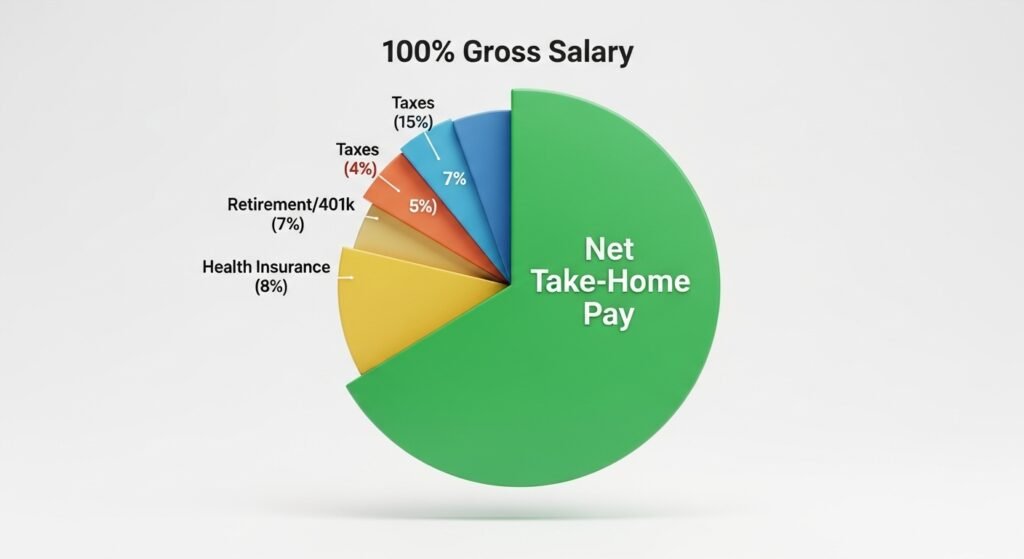
Now, let’s look at how percentages affect your take-home pay. Using the weekly gross pay of $1,111.00 calculated in Section 1, determine the impact of standard deductions.
- Health Insurance Deduction: Your company deducts 4% of your gross pay for health insurance. Calculate this amount ($1,111.00 x 0.04 = $44.44).
- 401(k) Contribution: You decide to contribute 6% of your gross pay to retirement. Calculate this amount ($1,111.00 x 0.06 = $66.66).
- Tax Withholding: Assume a flat 15% for federal and state taxes. Calculate the tax total ($1,111.00 x 0.15 = $166.65).
- Total Deductions: Add these three amounts together ($44.44 + $66.66 + $166.65 = $277.75).
- Final Net Pay: Subtract total deductions from your gross pay ($1,111.00 – $277.75 = $833.25).
Section 4: Productivity and Time Allocation
As a final exercise, consider your efficiency during an 8-hour workday. You spent 2 hours in meetings, 4 hours on project work, and 2 hours answering emails.
- Meeting Percentage: (2 / 8) x 100 = 25%.
- Project Work Percentage: (4 / 8) x 100 = 50%.
- Email Percentage: (2 / 8) x 100 = 25%.
- Self-Reflection: If your core job is project work, spending 50% of your time on it might be lower than desired. This data allows you to discuss time management with your supervisor.
Essential Math Formulas for the Office Environment
Mastering these formulas allows you to perform calculations quickly without always relying on complex software. They are the building blocks for more advanced financial analysis and reporting.
Payroll and Compensation Formulas
Calculating pay correctly is perhaps the most vital application of workplace math. These formulas ensure that employees are paid fairly and that the company remains in compliance with labor laws.
- Regular Gross Pay: Hourly Rate × Regular Hours Worked (usually up to 40).
- Overtime Rate (Time-and-a-Half): Regular Hourly Rate × 1.5.
- Overtime Earnings: Overtime Rate × Overtime Hours Worked.
- Total Gross Earnings: Regular Gross Pay + Overtime Earnings + Bonuses/Commissions.
- Net Pay (Take-Home): Total Gross Earnings – Total Deductions (Taxes, Insurance, etc.).
Percentage and Growth Formulas
Percentages help you understand the scale of changes in a business. Whether you are looking at a budget increase or a drop in sales, these formulas provide the necessary context.
- Simple Percentage of a Value: (Percentage / 100) × Total Value.
- Percentage Increase: [(New Value – Old Value) / Old Value] × 100.
- Percentage Decrease: [(Old Value – New Value) / Old Value] × 100.
- Reverse Percentage (Finding the Original Cost): Sale Price / (1 – Discount Rate).
- Margin Percentage: [(Revenue – Cost) / Revenue] × 100.
Productivity and Time Management Formulas
Measuring how time is spent is a key part of workplace readiness. These formulas help you and your manager see if resources are being used effectively.
- Labor Productivity: Total Output / Total Labor Hours.
- Capacity Utilization: (Actual Output / Potential Output) × 100.
- Absenteeism Rate: (Number of Absent Days / Total Work Days) × 100.
- Time Allocation: (Hours spent on specific task / Total hours in workday) × 100.
Budgeting and Project Management Formulas
If you are responsible for a department budget or a specific project, you will need to track spending compared to your initial estimates.
- Budget Variance: Actual Spend – Budgeted Amount.
- Variance Percentage: (Budget Variance / Budgeted Amount) × 100.
- Unit Cost: Total Cost of Production / Number of Units Produced.
- Return on Investment (ROI): [(Net Profit / Cost of Investment) × 100].
Unit Conversion Formulas for Office Logistics
Many offices deal with physical space, shipping, or supply management. Quick conversions are often necessary to ensure orders are correct.
- Minutes to Decimals: Number of Minutes / 60 (e.g., 45 mins / 60 = 0.75 hours).
- Decimals to Minutes: Decimal Value × 60 (e.g., 0.2 hours × 60 = 12 minutes).
- Square Footage: Length (in feet) × Width (in feet).
- Price Per Unit: Total Bulk Price / Quantity in Bulk Pack.
Math is more than just numbers on a page or a screen. It is a tool for building the life you want for yourself. When you understand the math of your workplace, you understand your value. This knowledge is something no one can ever take away from you. It is the ultimate key to achieving your professional dreams.
Frequently Asked Questions
What is the difference between a workweek and a pay period for math purposes?
A workweek is a fixed and regularly recurring period of 168 hours—seven consecutive 24-hour periods—used specifically to calculate overtime. A pay period is the frequency with which you receive your check, such as bi-weekly or monthly. It is important to remember that overtime is always calculated based on the workweek, even if your pay period covers multiple weeks.
How do I calculate the regular rate of pay for a salaried employee?
To find the hourly rate for a salaried worker, you must divide the weekly salary by the number of hours the salary is intended to cover. For a standard 40-hour week, you divide the weekly gross by 40. This resulting figure is then used as the base to calculate any overtime multipliers.
Can an employer pay a flat sum for overtime instead of a calculated rate?
Federal law generally requires overtime to be paid based on a calculation of 1.5 times the regular rate. Paying a flat “lump sum” for overtime regardless of the hours worked is often a violation of labor standards. Precise mathematical tracking is the only way to stay compliant with legal regulations.
What is the weighted average method for multiple pay rates?
If an employee works two different jobs at two different pay rates for the same company, the employer must use a weighted average. You add the total earnings from both rates and divide by the total hours worked to find the “regular rate.” Overtime is then calculated at half of this weighted average for every hour over forty.
How do percentages apply to discretionary versus non-discretionary bonuses?
Non-discretionary bonuses are those promised in advance, such as a 10% production bonus, and must be included in the regular rate for overtime math. Discretionary bonuses are unexpected gifts and do not usually change the base rate for overtime calculations. Understanding this distinction is vital for accurate payroll math.
Does the law require “double time” pay for holiday work?
There is no federal requirement for double time pay on holidays or weekends under the FLSA. These premium rates are usually part of a specific employment contract or company policy rather than a legal mandate. However, if a company offers it, the math follows the same logic as overtime but uses a 2.0 multiplier instead of 1.5.
How do I convert a monthly salary to an hourly rate for budget planning?
To find your hourly value from a monthly salary, multiply the monthly amount by 12 to get the annual total. Divide that annual total by 52 weeks, and then divide that weekly result by 40 hours. This calculation helps you understand your exact earnings per hour of labor.
What role does rounding play in workplace math?
Many employers round time to the nearest quarter-hour (15 minutes). For this to be legal, the rounding must work both ways—sometimes in favor of the employee and sometimes in favor of the employer. You should always check if your company rounds to the nearest five minutes or fifteen minutes to ensure your math matches theirs.
How do I calculate the percentage of my income spent on taxes?
To find your effective tax rate, divide your total tax paid by your gross income and multiply by 100. This is often lower than your “tax bracket” because of deductions and credits. Knowing this percentage helps you understand the actual impact of a raise on your net income.
What is the formula for calculating a prorated salary?
If you start a job in the middle of a month, your pay is prorated based on the days worked. Divide the monthly salary by the total workdays in that month to find the daily rate. Multiply that daily rate by the number of days you actually worked during that period.
How do I calculate a commission-only paycheck?
For commission-only roles, your pay is a pure percentage of your total sales volume. If you sell $50,000 worth of products at a 3% commission rate, you multiply 50,000 by 0.03. It is important to ensure that this total still meets the legal minimum wage requirements for the hours worked.
What is the mathematical impact of a “draw against commission”?
A draw is an advance payment that is later subtracted from your earned commissions. If you receive a $1,000 draw but only earn $800 in commission, you may “owe” the company the $200 difference in future cycles. Keeping a running percentage of your sales is the best way to track if you will clear your draw.
How do I calculate a cost-of-living adjustment (COLA)?
A COLA raise is usually based on the percentage of inflation reported by the government. If inflation is 3% and your salary is $40,000, you multiply 40,000 by 0.03 to find your raise amount of $1,200. This adjustment is designed to keep your buying power the same as prices rise.
What are the math requirements for job costing in manual labor?
Job costing requires adding the hourly wages of all crew members to the cost of equipment and materials. If a crew of four works five hours at $20/hour, the labor cost is $400. Adding a percentage for “overhead” ensures the project is profitable for the business owner.
How do percentages work with 401(k) company matching?
If a company matches 50% of your contributions up to 6% of your salary, you must calculate both parts. First, find 6% of your gross pay to see the limit. Then, calculate 50% of whatever you choose to contribute to see the total employer addition.
Can overtime math be applied to piece-rate work?
Yes, piece-rate workers who are non-exempt must still receive overtime pay. You divide the total weekly earnings by the total hours worked to find the hourly rate. Then, for every hour over forty, the employee receives an extra half-time payment based on that rate.
How do I calculate the “Net Present Value” of a job offer?
This involves comparing the base salary, the percentage value of benefits, and the cost of commuting. You subtract the annual cost of gas and tolls from the gross pay to see your real earnings. This math helps you choose between two different job offers with different locations.
What is a “shift differential” and how is it calculated?
A shift differential is an extra amount per hour for working undesirable shifts, like overnights. It can be a flat dollar amount (+$2.00/hour) or a percentage (+10%). This extra amount must be added to your base pay before calculating any overtime.
How do I calculate the percentage of my workday spent on specific tasks?
Track your time for each task for one week and divide that by the total hours worked. If you spend 8 hours in meetings during a 40-hour week, you spend 20% of your time in meetings. This data is helpful during performance reviews to show how you manage your time.
How does math help in understanding “Compensatory Time”?
Compensatory time, or “comp time,” is giving time off instead of cash for overtime worked. In the private sector, this is usually illegal for non-exempt workers. In the public sector, it must be calculated at the same 1.5 rate (1 hour of overtime equals 1.5 hours of time off).